 |
 |
 |
| * Unsold lots available for sale at indicated reserve plus 22% buyer's commission plus postage & insurance.Loading... | First | Previous | Next | Last | Index |
| WORLD LITERATURE & CATALOGUES: EUROPE | ||||
| Lot | Description | Status | ||
| 14110 |
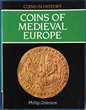
Grierson, Philip, Coins of Medieval Europe (Coins in History Series). London, B. A. Seaby Ltd., 1991. Hardback in the publisher?s dust jacket, 248 pages. ISBN 1-85264-058-8. A wide-ranging one-volume history of European coinage from the end of the Western Roman Empire to the eve of the modern period, revised and expanded from the author?s earlier French edition. Grierson moves clearly through the major monetary shifts of the Middle Ages, from early post-Roman issues and Carolingian reform to the spread of denier and pfennig systems, the later return of large silver and gold, and the growing variety of regional mints, denominations, and designs, always linking legends, types, and fabric to the political and economic world that produced them. Well illustrated with abundant photographs for easy comparison and study, and supported by concise references for further reading. A clean, well-kept copy with a bright jacket and crisp pages throughout.
| SOLD at A$85 | ||
|---|---|---|---|---|
| 14111 |
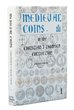
Medieval Coins in the Christian J. Thomsen Collection, Volume 1 by Kristian Erslev, here in the 1992 Attic Books English edition revised and expanded by Alan M. Stahl and Allen G. Berman, is a major and highly important reference for medieval numismatics, based on one of the great historic collections of Europe. Originally published in Copenhagen in 1873, this substantial hardcover volume catalogues over 4,100 coins and covers an exceptionally broad range of series including Byzantium, the Dark Ages, Crusader and Islamic coinages, as well as England, Serbia, Italy, Spain, Portugal, France, and the Low Countries. Particularly valuable are the updated attributions, modern bibliographic additions, rarity notes, maps, indexes, and the greatly enhanced photographic plates, all of which make this far more than a simple reprint and establish it as a practical working reference for collectors and researchers alike. With Thomsen?s collection now preserved in the Royal Danish Museum, the work remains both a landmark of numismatic scholarship and a fascinating record of one of the most influential medieval coin cabinets ever formed. Dust jacket with several short tears and slight dusting to the top, otherwise a clean and very good example.
| SOLD at A$40 | ||
| 14112 |
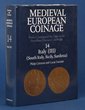
Medieval European Coinage, Volume 14: Italy (III), South Italy, Sicily, Sardinia, with a Catalogue of the Coins in the Fitzwilliam Museum, Cambridge. Cambridge University Press, 2009. Digitally printed paperback, 793 pages, 63 plates with facing text. A major and very useful volume in the Medieval European Coinage Grierson, Philip, and Lucia Travaini., series, covering the rich and complicated coinage of South Italy, Sicily, and Sardinia from the mid-10th century to the age of Ferdinand the Catholic, and including the pre-Norman issues as well as the coinages of the Norman, Hohenstaufen, Angevin, and Aragonese rulers. The region?s political and monetary history is especially complex, and that is exactly what makes this one of the more interesting and rewarding volumes in the series, both for study and for attribution. A very attractive copy, about new overall, clean, fresh, and very well kept, with only the lightest signs of handling.
| SOLD at A$100 | ||
| 14113 |
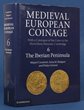
Medieval European Coinage, Volume 6: The Iberian Peninsula. A major and very useful reference, and the first English-language survey to bring modern research on the coinage of Spain and Portugal, circa 1000-1500, to a wider international audience. Written by leading specialists, it provides an authoritative study of the coinages of Aragon, Catalonia, Castile, Leon, Navarre, and Portugal, treating them together in a way rarely attempted and offering important new perspectives on monetary circulation across the peninsula. The volume also includes an extensive catalogue of the Iberian medieval coins in the Fitzwilliam Museum, making it valuable both as a scholarly study and as a practical reference for collectors, historians, and archaeologists. A very attractive copy, about new overall, clean, fresh, and very well kept.
| AVAILABLE at A$100 | ||
| 14114 |
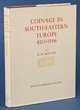
Coinage in South-Eastern Europe 820-1396, by D. M. Metcalf. Royal Numismatic Society, 1979. 371 pages, 7 plates, red cloth with dust jacket. An important and long respected study of the coinage of South-Eastern Europe across a wide and complex medieval period, bringing together Metcalf?s careful scholarship on a region central to Byzantine, Balkan, and crusader monetary history. A very good working reference, still much used by collectors and researchers for this series. Dust jacket with a few minor faults, otherwise little used, with the book itself remaining a fine, and attractive copy overall.
| AVAILABLE at A$75 | ||
| 14115 |
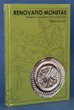
Svensson, Roger. Renovatio Monetae: Bracteates and Coinage Policies in Medieval Europe. Spink, London, 2013. Hardcover, laminated boards, A4 format, 284 pages with 16 plates and facing text. A serious and very useful study of medieval European bracteates and the monetary policies behind them, issued here as the revised English translation of the related work first published by the Swedish Numismatic Society in 2012. A clean and attractive copy, about new overall, with fresh boards, a tight binding, and very little sign of handling. A high quality example of an important modern reference.
| AVAILABLE at A$40 | ||
| 14116 |
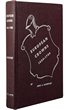
European Crowns 1600?1700. John S. Davenport. Galesburg, Illinois, 1974 (printed by Hewitt Printing Corp., Chicago). Hardback in brown pebbled cloth with silver-stamped helmet-and-shield device and titles, issued without dust jacket. vi, 631 pages, with roughly 1,500 black-and-white illustrations and a foldout map of Italy, plus appendix and bibliography. A core identification manual for seventeenth-century talers and crown-size issues across the major European series, arranged country by country and by issuing authority, with strong visual coverage and clear attention to types, legends, mints, and rulers. Uses the standard Davenport numbering with rarity guidance, and keeps the focus on attribution rather than prices, making it especially useful for systematic cataloguing and quick side-by-side comparison at the desk. A clean, square copy with crisp pages, showing only light rubbing at the corners and edges.
| SOLD at A$40 | ||
| 14117 |
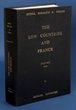
The Low Countries and France, Vol. 2. Mitchiner, Michael. Hawkins Publications, 1 February 1991. Hardcover, 864 pages. A substantial and very useful reference, this large-format volume is the second in Mitchiner?s three-volume series and deals with the jetons, medalets, and tokens of the Low Countries and France from the mid-16th century to the modern period. Of particular value is its treatment of the Low Countries jetons, which are especially important for the way they reflect the political history of the Dutch Revolt, tracing the transformation of the Spanish Netherlands into the Dutch Republic in the north and the Spanish Netherlands of the south, now Belgium. These issues are discussed in their historical setting, making the book not just a catalogue but a genuinely informative guide to the series. A very well-kept second-hand copy, presenting about new overall, with fresh covers, a tight binding, and only the lightest signs of handling.
| SOLD at A$100 | ||
| 14118 |
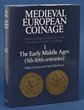
Medieval European Coinage, Volume 1: The Early Middle Ages (5th-10th Centuries). Grierson, Philip, and Mark Blackburn. Cambridge University Press, 2007. Trade paperback. A major reference and the opening volume in the important Medieval European Coinage series, covering the coinage of Western Europe from the collapse of Roman rule in the fifth century to the rise of clearly defined political kingdoms in the tenth. The work surveys the issues of the Vandals, Visigoths, Burgundians, Franks, Ostrogoths, Lombards, Carolingians, popes, Anglo-Saxons, Northumbria, and the Anglo-Viking coinages of the Danelaw, giving a broad and scholarly foundation for the early medieval series. A very attractive copy, about new overall, clean, fresh, and well kept, with little sign of handling.
| SOLD at A$250 | ||
| 14119 |
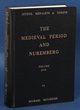
The Mediaeval Period and Nuremberg, Vol. 1. Mitchiner, Michael. Hawkins Publications, 1988. Hardcover. A substantial and highly useful reference, this first volume in Mitchiner?s series on jetons, medalets, and tokens is divided into three main parts: an opening study of earlier metalworking traditions, using Romano-British and Anglo-Saxon artefacts to place later production in context; a major survey of medieval jetons from the later 13th century to 1521, with around 900 copper-base pieces catalogued, discussed, and illustrated; and an extensive section on Nuremberg jetons, cataloguing some 1,400 examples and examining the work of more than 50 named masters, including Schultes, Krauwinckel, Lauffer, and Loos. The added analytical work, including X-ray fluorescence testing on over 300 pieces, gives the volume real scholarly weight, while the catalogue format keeps it practical and easy to use. A very strong reference for collectors and researchers of medieval European jetons and related series.
| SOLD at A$100 | ||
| First | Previous | Next | Last | Index |