 |
 |
 |
| * Unsold lots available for sale at indicated reserve plus 22% buyer's commission plus postage & insurance.Loading... | Next | Last | Index |
| ANCIENT COINS: GREEK | ||||
| Lot | Description | Status | ||
| 10001 |
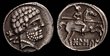
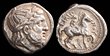
HISPANIA, Bolskan (Huesca, northern Spain). 2nd century BC. Silver Denarius (3.93g). Bare bearded head right, Iberian letter N behind / Horseman galloping right, holding spear; Bolskan below in Celtiberian. FAB 1911. A classic and highly popular Celtiberian type. Wonderful old cabinet toning. VF.
| SOLD at A$230 | ||
|---|---|---|---|---|
| 10002 |
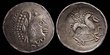
CARPATHIAN REGION, Uncertain tribe. Circa 2nd-1st century BC. Silver Tetradrachm (12.82g). Scyphate mit Ringelkopfreiter type. Celticised laureate and pearl-diademed head left / Celticised horseman right. Dembski 1165; Flesche 698; OTA 250A/1; cf. Preda pl. LX, 1. aEF, with very attractive old cabinet toning. Broad flan. A classic and iconic type from the late Celtic coinage of the Carpathian basin. Superb piece and undoubtedly the finest known example. For the most recent sold example of the type, 2024, see; Leu Auction 31, lot 141, hammered US$1,300. The example we offer is far superior in quality to the sold example and all others appearing in Coin Archives. (P)
| SOLD at A$2000 | ||
| 10003 |
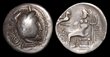
EASTERN EUROPE, Imitations of Alexander III of Macedon. 1st century BC. Silver Drachm (3.55g). Mint in the lower Danube region. Stylised head of Herakles right, wearing lion-skin / Stylised Zeus Aetophoros seated left; monogram in left field. OTA 591/3; KMW 1486; Lanz -; CCBM I S202. Toned, with faint deposits and very attractive old cabinet toning. gVF. For the most recent sold example see; CNG Auction 599, lot 8, 12 November 2025, realised USD 300. The piece offered here is most likely the finest known for the type. (P)
| SOLD at A$140 | ||
| 10004 |
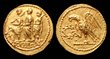
SKYTHIA, Geto-Dacians. Koson. Mid 1st century BC. Gold Stater (8.62g). Roman consul accompanied by two lictors advancing left; monogram to left / Eagle standing left on sceptre, holding wreath. Hourmouziadis dies B/d; Iliescu 1; RPC I 1701A; HGC 3, 2049. Well struck on a broad flan. Lustrous. Superb EF. The enigmatic gold staters of Koson, struck in the mid 1st century BC, sit at the meeting point of Roman and Geto-Dacian worlds. Echoing Roman Republican denarii in their imagery yet issued beyond Rome's mints, they likely served a Dacian ruler named Koson as instruments of prestige, alliance, and authority. Their unusually fine preservation today reinforces their role as ceremonial pieces rather than everyday currency. (P)
| SOLD at A$2600 | ||
| 10005 |
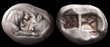
KINGS OF LYDIA. Kroisos. Circa 564/53-550/39 BC. Silver Stater (10.85g). Sardes mint. Confronted foreparts of lion and bull / Two incuse squares. Berk 20; Kurth S1; Traite I 407-8; SNG Ashmolean 760. VF. This silver stater belongs to the very first true bimetallic monetary system in history. As the final ruler of the Lydian kingdom before its conquest by Persia, Kroisos replaced the uncertain electrum coinage of his predecessors with carefully regulated gold and silver denominations, setting new standards of weight, purity, and trust in trade. The silver staters, issued from the royal mint and backed by Lydia's immense wealth from regional trade routes and the gold-rich waters of the Pactolus, circulated widely across the Greek world, Asia Minor, and the Near East, where they were recognised as a prestigious and reliable medium of exchange. In doing so, they functioned not only as instruments of commerce but also as deliberate expressions of royal authority and economic sophistication at the height of Lydian power. Although Kroisos fell to Cyrus the Great, the monetary model he created was adopted and refined by the Achaemenids and later Greek and Hellenistic states, giving these staters a foundational place in the story of coinage and early monetary economies. For the type see; Triton XXII, lot 263, hammered US$12,000. (P)
| SOLD at A$3700 | ||
| 10006 |
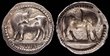
LUCANIA, Sybaris. Circa 550-510 BC. Silver Stater (7.08g). VM in exergue, bull standing left, head reverted, on triple exergual line of dots between parallel lines; border of dots between concentric circles / Same type, reversed and incuse, with exergual line and border both dentate. SNG ANS 830; SNG Lockett 455; SNG Lloyd 449; HN Italy 1729. Very attractive old cabinet toning. One of the finest known examples for the issue. aEF. This silver stater of Sybaris recalls one of the richest and most refined cities of Magna Graecia, founded circa 720 BC on the fertile plain between the Crathis and Sybaris rivers. From about 530 BC the city issued distinctive relief/incuse coinage, with a powerful bull walking left, likely a river god alluding to the waters that sustained its prosperity. Technically sophisticated and visually striking, these coins functioned as both currency and a display of civic wealth. Though Sybaris was destroyed by Croton in 510 BC and its site deliberately flooded, its coinage remains a vivid witness to a brief but dazzling age of luxury and power. (P)
| SOLD at A$3400 | ||
| 10007 |
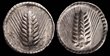
LUCANIA, Metapontion. Circa 540-510 BC. Silver Nomos (7.90g). Ear of barley with eight grains and bracts at base; MET down left field, pellet border / Incuse ear of barley with eight grains; rayed border. Noe Class I, 1; Gorini -; HN Italy 1459; SNG ANS 166; Kraay & Hirmer 228; Prospero 51. gVF or better for the type. This silver nomos, an exceedingly rare Noe 1 from the first emission of Metapontion around 540 BC, stands at the very beginning of the city's celebrated coinage. Founded by settlers from Kroton and Sybaris and enriched by vast grain fields, Metapontion adopted the distinctive incuse fabric of Magna Graecia and chose the barley ear as a proud symbol of its agricultural wealth. (P)
| AVAILABLE at A$1500 | ||
| 10008 |
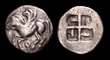
CORINTHIA, Corinth. Circa 530 BC. Silver Drachm or Third Stater (2.70g). Pegasus with curled wing trotting or flying left, on exergual line, Q beneath / Quadripartite incuse square of windmill pattern. BMC 29; Rosen 1707; BCD Corinth 7 (this reverse die). Very rare. One of only a couple known of this impressive early issue of Corinth. VF for the type. For the type see; Noble Auction 128, lot 2544, hammered A$6,500. (P)
| SOLD at A$750 | ||
| 10009 |
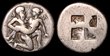
ISLANDS OFF THRACE, Thasos. Circa 500-480 BC. Silver Stater (8.41g). Bald-headed nude satyr moving right, holding a nymph who raises her hand in protest; to right, A / Quadripartite incuse square. Le Rider, Thasiennes, 6; SNG Copenhagen Suppl. 103. gVF for the type. Thasos, the wealthy island off the Thracian coast, derived its prosperity from rich silver mines on both the island and the mainland, with Herodotus (VI.46) noting an annual income of 200-300 talents, further enhanced by a controlled export trade in fine wine that helped spread its coinage across the Aegean. The didrachm staters, struck on a local Thracian standard, evolved from early vigorous types showing a wild satyr abducting a struggling nymph to later issues of higher artistic refinement, like the present piece, where the satyr appears more human and the nymph's resistance is more composed. The fine engraving reflects wider Greek influence, with clear parallels to the satyr heads of Katane and the nymphs of Neapolis, while the added letters A, S or PH in the obverse field, absent from earlier issues, are best understood as magistrates' initials rather than artist signatures, in line with common Classical practice. For the type and most recently sold example see; Nomos Auction A24, lot 49, hammered US$41,000. (P)
| SOLD at A$1800 | ||
| 10010 |
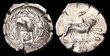
SICILY. Syracuse. Deinomenid Tyranny, Hieron I. Circa 475-470 BC. Silver Tetradrachm (17.22g). Charioteer driving a walking quadriga right, kentron in right hand, reins in left; Nike flying right above, crowning horses, dotted border / Retrograde legend; head of Arethusa right, wearing pearl taenia and necklace, hair looped up under band; four dolphins swimming clockwise around. HGC 2, 1307. Boehringer 227-278 and 293-355. A lovely old cabinet toning. Reverse slightly off centre, otherwise VF. For the type and similar quality see; HA A-3098/33013, hammered US$5,750. (P)
| SOLD at A$3000 | ||
| 10011 |
Knidos. 465-449 BC. Silver Drachm (6.38g). Forepart of lion right, with open mouth / Head of Aphrodite right, wearing ear pendant and necklace, pearl diadem in the hair, which ends in a plait at the back; incuse square. Cahn 49, 77.32 (this specimen); SNG Cop. 238 (same dies); Traite I, pl. XVIII, 15 (same dies). Wonderful old cabinet toning. EF for the type and undoubtedly one of the finest known examples. This drachm, struck at Knidos in Caria circa 465-449 BC, belongs to a period when the city was emerging as a vibrant centre of culture, commerce, and artistic innovation. Positioned on the Carian coast, Knidos controlled important sea routes linking the Aegean with the eastern Mediterranean, and its growing prosperity is reflected in the refinement of its silver coinage. Issues of this era, often bearing the lion and the head of Aphrodite, express both local civic pride and a sense of divine protection, encapsulating Knidos' identity as a confident, independent polis contributing to the classical Greek legacy in art and civic life. For the type and most recent sold example see; Hess Divo, Auction 343, lot 136, hammered US$9,750. (P)
| AVAILABLE at A$3000 | ||
| 10012 |
SICILY, Leontini. Circa 450-440 BC. Silver Tetradrachm (16.93g). Head of Apollo right, wearing laurel wreath / Head of roaring lion right; four barley grains and LEO-(N)-TI-NON around. Boehringer, Munzgeschichte 45 (same obverse die); SNG ANS 222-31; SNG Lloyd 1056 (same obverse die); Rizzo pl. XXIII, 1; Basel 349; Gulbenkian 217. Lightly toned. EF. This tetradrachm, struck during the height of Leontini's classical power, embodies the city's cultural pride and economic strength. In a period of artistic and political flourishing across Sicily, such coinage served not only as currency but as a bold statement of identity and independence amid rising regional rivalries. From the David Allen Collection; acquired from Triton XIV (4 Jan 2011), lot 27; previously ex Hirsch 261 (7 May 2009), lot 76. (P)
| SOLD at A$4400 | ||
| 10013 |
SIKYONIA, Sikyon. Circa 431-400 BC. Silver Stater (12.04g). Chimaera standing right, raising forepaw; retrograde (S)E below / Dove flying right; all within wreath. BCD Peloponnesos 203.4 corr. (same dies). gVF, with bright surfaces, struck on a splayed flan and lightly double struck on the obverse. Rare. This stater is a rare and intriguing issue from Sikyon, one of the important mints of the Peloponnesos around the late 5th century BC. It belongs to a series that normally carries the control letters SE in standard orientation, but here they appear reversed, marking a much scarcer and highly distinctive variety. The obverse shows the fire-breathing Chimaera, perhaps a nod to Sikyon's mythological rivalry with nearby Corinth, while the reverse dove of Aphrodite reflects the goddess's importance in local cult. Together, the unusual control marks and rich imagery give this coin particular interest both numismatically and symbolically. For the same type and most recent sold example, see Noble Sale 133, lot 3661, hammered US$2,300; the present coin is superior in overall quality. (P)
| SOLD at A$1150 | ||
| 10014 |
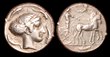
SICILY, Syracuse. Second Democracy, circa 420-415 BC. Silver Tetradrachm (17.35g). Charioteer driving quadriga walking right, holding goad in his right hand and reins in his left; above, Nike flying right to crown the horses; in exergue, locust right / SYRAKOSION, head of Arethusa right, wearing sphendone and hairnet; around, four dolphins. Cf. Boehringer 727-8 (V360/R495; die combination not recorded); Rizzo pl. XL, 17; McClean 2682, pl. 94, 3; Jameson 781; Pozzi 590 (all from the same reverse die). A rare die combination not recorded by Boehringer. gVF. A lovely example of confident and attractive style. One of the finest known, if not the finest. This Syracuse coin comes from the city's golden age in the 5th century BC, when it was the dominant power in Sicily. The imagery is proudly Syracusan: the head of the nymph Arethusa, framed by dolphins that point to the city's sea power and the sacred spring at Ortygia, paired with the racing quadriga and victory symbols that celebrate elite competition and civic triumph. Coins like this were not just money; they were Syracuse showing the Mediterranean what it was: wealthy, confident, and artistically unmatched. For the same type see; Leu Web Auction 20, lot 334, hammered US$2,500. (P)
| SOLD at A$2900 | ||
| 10015 |
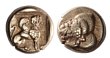
LESBOS. Mytilene. Circa 412-378 BC. Electrum Hekte (2.53g). Forepart of winged lion left / Sphinx seated right, with curved wings, within linear square within incuse square. Bodenstedt 63; SNG Copenhagen 303; SNG von Aulock 1704. Attractive and well centred. Lightly toned. VF. Possibly one of the finest known for this very difficult issue. (P)
| SOLD at A$1900 | ||
| 10016 |
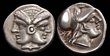
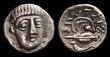
MYSIA. Lampsakos. 4th-3rd centuries BC. Silver Diobol (1.41g). Janiform female head / Helmeted head of Athena right within incuse square. SNG BN 1195-6. Lightly toned. VF for the type. This graceful silver diobol comes from Lampsakos, a wealthy and artistically sophisticated Ionian city on the Hellespont whose coinage is famed for its originality. The remarkable janiform female head, with its perfectly balanced twin profiles, distils both religious symbolism and the engraver's mastery into a tiny flan, turning a small fractional into a true miniature work of art. Elegant, rare and visually arresting, it encapsulates how a prosperous coastal polis expressed identity and piety through its finest silver. (P)
| SOLD at A$475 | ||
| 10017 |
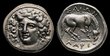
THESSALY, Larissa. Circa 356-342 BC. Silver Drachm (6.18g). Head of the nymph Larissa facing slightly left, wearing ampyx, pendant earring, and necklace / Horse grazing right; SAION above, LARI below. BCD Thessaly II 312; HGC 4, 454. Extremely rare variety with the civic legend arranged in the unusual swapped form, SAION above and LARI below the horse. A sharply struck and beautifully preserved example, Nearly Mint State. A particularly attractive specimen of this rare Larissan drachm issue. Ex Grand Haven Collection; acquired in early 2019 from an American collector who had purchased the coin privately from the Grand Haven Thessaly, Larissa Collection. The collector regarded this piece as among the finest and rarest coins in that collection, a view well supported by its remarkable quality, style, and preservation. In recent years, a number of coins from the Grand Haven Collection have appeared in CNG sales, further underlining the importance and depth of the collection from which this coin came. The coin was later sold by the American collector to Superior Galleries, and subsequently appeared in Herakles Auction 1, Savoca Coins, lot 20, where it realised AUD 8,200. This coin was among the final purchases made by our vendor before we were handed his collection for this sale and our upcoming ones.
| SOLD at A$12750 | ||
| 10018 |
AEGINA, Islands off Attica. Circa 350-338 BC. Silver Stater (12.26g). Land tortoise with segmented shell / Thin-skew incuse square divided into compartments, AI in the upper cells, dolphin upward in lower left. A very attractive dark cabinet toning. gVF. This stater, struck in the final years before Macedonian dominance, belongs to the late Aeginetan land tortoise series that replaced the earlier sea turtle once emblematic of the island's maritime commerce. The refined incuse and control marks, AI above and dolphin at left, reflect a carefully organised civic issue and still allude to Aegina's maritime lifeblood even as its political influence waned. (P)
| SOLD at A$3700 | ||
| 10019 |
LUCANIA. Metapontion. Circa 340-330 BC. Silver Didrachm or Nomos (7.94g). Bearded head of Leukippos to right, wearing Corinthian helmet; in field to left, head of a lion to right / META Barley ear with leaf to left; above leaf, vertical club with head below; below leaf, AMI. HN Italy 1575; Johnston Class B, 2.11; SNG ANS 439. EF. An exceptional example, with crisp detail and elegant die work characteristic of the finest issues of Metapontion, with outstanding old cabinet toning. A truly superb specimen. This didrachm, struck at Metapontion around 340-330 BC, belongs to one of the city's most accomplished issues, produced while the Greek communities of South Italy were negotiating growing pressure from Italic neighbours and rising great powers. By invoking Leukippos, Metapontion's heroic founder, the series affirms the city's proud traditions and civic identity, while the accompanying symbols and magistrate's marks place it firmly within a carefully organised monetary system that supported both local trade and wider Greek connections. (P)
| SOLD at A$1250 | ||
| 10021 |
PAEONIA, Patraos. Circa 335-315 BC. Silver Tetradrachm (12.21g). Laureate head of Apollo right / [PATR]AOY, horseman in crested helmet charging right, spearing fallen enemy carrying Macedonian shield. BM 4. From the Paeonian Hoard. End of king's name legible. Acquired from Harlan J. Berk, Sale 230, lot 247, 28 January 2025, hammered US$440; ex Paeonian Hoard.
| SOLD at A$500 | ||
| 10022 |
Siculo-Punic Issues. Circa 330-305 BC. Silver Tetradrachm (17.11g). Charioteer in galloping quadriga right, crowned by Nike flying left above; Punic inscription below / Wreathed head of Arethusa right, wearing triple-pendant earring and necklace; three dolphins around. Jenkins, Part I (SNR), pl. 15, 10. Well centred and unusually superb for the type, with attractive pale grey toning and golden hues. gVF. (P)
| SOLD at A$2000 | ||
| 10023 |
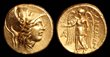
KINGS OF MACEDON. Alexander III the Great. 336-323 BC. Gold Stater (8.48g). Arados mint. Struck under Menes, circa 325/4-324/3 BC. Helmeted head of Athena right, wearing crested Corinthian helmet pushed back and adorned with serpent; her features finely modelled / Nike standing left, holding wreath in extended right hand and stylis in left; AP monogram in left field. Price 3423. A choice example for the type. aEF. This issue from Arados, struck near the close of Alexander's lifetime under the satrap Menes, his trusted administrator in the coastal Levant, bears the AP monogram of the Arados mint. Its Corinthian helmet, finely rendered Nike and full weight standard all attest to the refinement and tight central control of Alexander's imperial coinage in the Near East. For the type and most recent sold example, a lower-grade specimen, see; Spink Auction A-24125, lot 1140, hammered US$7,500. (P)
| SOLD at A$5750 | ||
| 10024 |
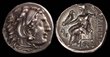
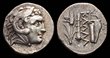
KINGS OF MACEDON. Lampsakos. Alexander III the Great, 336-323 BC. In the name and types of Alexander III. Struck under Leonnatos, Arrhidaios, or Antigonos I Monophthalmos. Silver Drachm (4.26g). Head of Herakles right, wearing lion skin / Zeus Aetophoros seated left; in left field, buckle left; below throne, crescent above A. Price 1365 var. A fantastic strike. Needle-sharp, well centred, and absolutely superb. A wonderful cabinet toning. gEF. (P)
| SOLD at A$700 | ||
| 10025 |
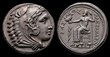
KINGS OF MACEDON. Alexander III the Great, 336-323 BC. Silver Tetradrachm (17.19g). Amphipolis mint. Struck under Antipater, circa 325-323/2 BC. Head of Herakles right, wearing lion-skin headdress / BASILEOS ALEXANDROU, Zeus Aetophoros seated left, holding eagle and sceptre; palm in left field, Pi below throne. Price 111; Troxell, Studies, Issue H1. Fine style. A boldly struck example with an impressive portrait, considerable eye appeal and wonderful toning. Removed from an NGC slab where graded Choice AU*, Strike 5/5, Surface 4/5, approximately five years ago. Acquired by the consignor, whose collection we are pleased to present, and regarded as one of the final major coins purchased during more than 50 years of collecting. Acquired from Herakles Auction 2, Germany, lot 3, hammered A$9,850.
| SOLD at A$14250 | ||
| 10026 |
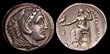
KINGS OF MACEDON. Alexander III the Great, 336-323 BC. Silver Tetradrachm (17.16g). Amphipolis mint. Struck under Antipater, circa 325-323/2 BC. Head of Herakles right, wearing lion-skin headdress / Zeus seated left on low throne, holding long sceptre in his left hand and eagle standing right, wings closed, in his right; in field to left, crescent. Price 89. EF/VF. Wonderful high-relief style. Gorgeous natural multi-hued toning. Superb. This tetradrachm from Amphipolis, issued under Antipater around the time of Alexander's death, channels the power and divine favour that sustained his rule. Struck on the cusp of the Succession Crisis, it stands not only as currency but as a compact monument to the legacy of empire at the moment its future became uncertain. (P)
| SOLD at A$800 | ||
| 10027 |
CAMPANIA, Phistelia. Circa 325-275 BC. Silver Obol (0.53g). Male head facing slightly right / fistluis in Oscan, retrograde, dolphin right, barley grain and mussel shell. Rutter p. 180, Ia; HN Italy 613; SNG ANS 567-578; SNG Lloyd 87; SNG France 1117-1128. Attractively toned. gVF. This obol was struck at Phistelia during a phase of regional self-assertion in southern Italy, reflecting the city's place within the vibrant, competitive landscape of Italic coinage. It embodies both local cultural autonomy and the broader Hellenistic currents shaping Campania in the shadow of growing Roman power. For the type see; Kunker Auction 133, lot 7873, hammered EUR 825. (P)
| SOLD at A$200 | ||
| 10028 |
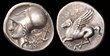
AKARNANIA. Leukas (Leucas). Circa 320-280 BC. Silver Stater (8.52g). Pegasus flying left / Head of Athena left, wearing Corinthian helmet; behind, API and anchor. BCD Akarnania 270; Calciati 146. Fresh and attractive. gVF. Amid the fractured politics of post-Alexandrian Greece, this silver stater of Leukas asserts the island city's regional presence with restrained, dignified coinage. It reflects a polis holding fast to its own identity while adapting to the shifting currents of Hellenistic power. For the same type and most recent sold example see; NAC Auction A-154 (19 May 2025), lot 1183, hammered US$5,700. (P)
| SOLD at A$1250 | ||
| 10029 |
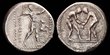
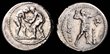
PAMPHYLIA, Aspendos. Circa 330/25-300/250 BC. Silver Stater (9.93g). Two wrestlers grappling / Slinger in throwing stance right; to right, forepart of horse right above laurel wreath; all within dotted square border. Tekin Series 5; SNG BN 110 var. (same); SNG von Aulock 4571 var. (symbol below horse); SNG Copenhagen 246. Minor double strike on the reverse. VF/gVF. This stater, issued in the closing years of classical Pamphylia, reflects Aspendos as a city deeply connected to athletic tradition and martial pride. In an era of shifting power after Alexander's campaigns, the coin stands as a local assertion of identity through the enduring language of strength, skill, and civic symbolism. (P)
| SOLD at A$425 | ||
| 10030 |
PISIDIA, Selge. Circa 325-250 BC. Silver Stater (10.58g). Two wrestlers grappling, AA between / Slinger advancing right in short chiton, preparing to discharge sling; triskeles above club in right field. Weber 7424, pl. 267; SNG von Aulock -; SNG Paris -. Apparently an unrecorded variety in most older references with AA between the wrestlers, though a number of specimens have appeared in recent decades. Well centred and sharply struck in high relief on a broad flan. A remarkable example of this iconic Pisidian issue. aEF. Acquired from Harlan J. Berk, Sale 216, lot 77, 27 July 2021, hammered USD 1,500.
| SOLD at A$725 | ||
| 10031 |
KINGS OF MACEDON. Kassander. As regent, 317-305 BC. Silver Tetradrachm (14.30g). In the name and types of Philip II. Amphipolis mint. Struck circa 316-311 BC. Laureate head of Zeus right / Youth, holding palm frond, on horseback right; aphlaston below, pellet in pi below raised foreleg. Le Rider pl. 46, 18; Troxell, Studies, Group 9, 323-5; SNG ANS 738-46. gVF. With a very attractive grey-golden toning. Struck at Amphipolis circa 316-311 BC. This attractive silver tetradrachm was issued by Kassander, acting as regent of Macedon, but bears the name and types of Philip II, aligning his authority with that of Alexander the Great's revered father. The obverse features the laureate head of Zeus, while the reverse shows a spirited youth on horseback, a symbol of Macedonian martial excellence. (P)
| SOLD at A$1100 | ||
| 10032 |
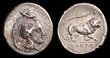
LUCANIA, Velia. Circa 300-280 BC. Silver Nomos (7.30g). Philistion group. Head of Athena right, wearing crested Attic helmet decorated with laurel wreath and wing; monogram behind neck guard, monogram before neck / Lion standing right; above, horizontal grain ear. Williams Period VII, 486 (O241/R340); HN Italy 1309; SNG Fitzwilliam 684 (same obverse die); Ars Classica & Naville XII, 520 (same dies); Jameson 400 (same obverse die). Attractive iridescent toning. gVF. This nomos was struck at the coastal city of Velia in Lucania in the early 3rd century BC, part of a distinguished Greek coinage tradition in southern Italy. As the home of the Eleatic school of Parmenides, Velia used its refined, often divinely themed coinage to express both civic pride and economic strength. This piece offers a succinct glimpse of the city's cultured identity on the eve of Roman dominance. (P)
| SOLD at A$600 | ||
| 10033 |
KINGS OF MACEDON. Demetrios I Poliorketes. 306-283 BC. Silver Tetradrachm (16.98g). Pella mint. Struck circa 294-293 BC. Nike, blowing trumpet and cradling stylis in her left arm, standing left on prow of galley left / Poseidon Pelagaios standing left, preparing to throw trident; g to left; to right, dolphin left above star. Newell 68 (obv. die LVII); Triton XI, 128 (same dies). Superb EF. Amazing cabinet grey toning, with traces of lustre remaining across the details. Struck at the historic mint of Pella. This silver tetradrachm of Demetrios I Poliorketes, the Besieger of Cities, captures the bold spirit of one of the most dynamic successors of Alexander the Great. Minted during a time of intense military campaigns and shifting power among the Diadochi, the coin represents Demetrios' ambition to restore Macedonian supremacy. His reign was marked by grand naval battles, the founding of cities, and an assertive royal image, all reflected in the strong, lifelike portraiture typical of his coinage. This piece stands as a testament not only to his military prowess but also to the evolving role of Hellenistic kingship, blending personal charisma, divine association, and political propaganda into a lasting numismatic legacy. For the type see; CNG Auction 85, lot 306, hammered US$7,500. (P)
| SOLD at A$5500 | ||
| 10034 |
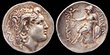
KINGS OF THRACE, Macedonian. Lysimachos. 305-281 BC. Silver Tetradrachm (17.24g). Lampsakos mint. Struck 297/6-282/1 BC. Diademed head of the deified Alexander right, with horn of Ammon / Athena Nikephoros seated left, transverse spear in background; monogram to inner left, crescent upward in exergue. Thompson 49; Muller 399 var. (crescent left); HGC 3. A superb example struck in high relief, with a very attractive portrait of Alexander the Great. Boldly struck on a very broad flan. Old cabinet toning with bluish and golden highlights. aEF. A rare variant distinguished by the placement of the crescent in the exergue, rather than to the left as in the standard Muller 399.
| SOLD at A$1900 | ||
| 10036 |
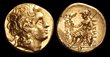
KINGS OF THRACE, Macedonian. Lysimachos. 305-281 BC. Gold Stater (8.44g). Pella mint. Struck circa 286-282 BC. Diademed head of the deified Alexander right, with horn of Ammon / Athena Nikephoros seated left, left arm resting on shield, transverse spear in background; monogram to inner left, C-like symbol on throne, K in exergue. Thompson 241; Muller -; SNG Lockett 1247 var. (letter on throne); Jameson 2464 var. (same); Naville IV, lot 521 (same dies); Triton XVIII, lot 426 (same dies). aEF. Well struck and nicely preserved, an evocative and historically important gold issue from one of the great Diadochi kingdoms. (P)
| SOLD at A$7750 | ||
| 10037 |
KINGS OF PERGAMON. Philetairos. 282-263 BC. Silver Tetradrachm (16.79g). Pergamon mint. Struck circa 269/8-263 BC. Diademed head right / Athena enthroned left, right hand resting on shield set at her feet, left elbow resting on small sphinx seated right; transverse spear in background, ivy leaf above knee, monogram on throne, bow to right. Westermark Group II, obv. die III; SNG BN 1603-5 (Eumenes I); SNG Hunterian 180 (same obv. die); SNG Ashmolean 750; SNG von Aulock 1354; BMC 30; Bement 1391; McClean 7672. Well centered on good metal with a sharp strike. Deep old cabinet toning with warm golden hues around the hair. aEF. This tetradrachm was struck under Philetairos, founder of the Attalid dynasty, and bears the finely engraved head of Seleukos I, highlighting Pergamon's early political ties to the Seleukid Empire. It belongs to the first phase of an emerging independent kingdom that would grow into a major Hellenistic power, an elegant and historically important piece from the dawn of Attalid rule. (P)
| SOLD at A$1600 | ||
| 10038 |
BITHYNIA, Kalchedon. Circa 260-230s BC. Silver Tetradrachm (16.48g). In the name and types of Lysimachos of Thrace. Diademed head of the deified Alexander right, with horn of Ammon / Athena Nikephoros seated left, left arm resting on shield, spear in background; monogram to inner left. Thompson -; Muller -. gVF. Unpublished. (P)
| AVAILABLE at A$1500 | ||
| 10039 |
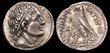
PTOLEMAIC KINGS OF EGYPT. Ptolemy II Philadelphos. 285-246 BC. Silver Tetradrachm (13.95g). Sidon mint. Dated regnal year 36, 250/49 BC. Diademed head of Ptolemy I right, wearing aegis, rendered in bold and lifelike Hellenistic style / Eagle standing left on thunderbolt, wings partially spread; EI above monogram to left, date, year 36, to right. Svoronos 749; SNG Copenhagen 516; DCA 21. gVF. This tetradrachm was struck at Sidon during the long, confident reign of Ptolemy II Philadelphos as a dynastic tribute to his father, Ptolemy I Soter, founder of the Ptolemaic kingdom and former general of Alexander. It reflects a moment when Hellenistic Egypt was at its height, using finely styled coinage as both currency and royal propaganda to project Alexandrian power along the Phoenician coast. From the David Allan Collection; acquired from CNG 287 (26 September 2012), lot 242. Since that sale, no further examples of this type appear to have come to market, and this piece is only the third recorded in CoinArchives, underlining its considerable rarity and strong appeal to collectors of Ptolemaic and Phoenician coinage. (P)
| SOLD at A$600 | ||
| 10040 |
PTOLEMAIC KINGS OF EGYPT. Ptolemy III Euergetes. 246-222 BC. Silver Tetradrachm (13.88g). Alexandria mint. Struck circa 230-222 BC. Diademed head of Ptolemy I right, wearing aegis around neck / Eagle standing left on thunderbolt; cornucopia to left. Svoronos 1001; SNG Copenhagen 167-8; Noeske 116. Very light old cleaning marks, otherwise attractive light toning with pleasing golden highlights. Well centred and sharply struck on a broad flan. aEF. This tetradrachm was struck at Alexandria under Ptolemy III Euergetes and reflects the power and confidence of the Ptolemaic dynasty at its height. Continuing the dynastic portrait tradition, it served not only as currency but as a deliberate tool of royal propaganda, broadcasting Ptolemaic authority and prestige across the Hellenistic world. For the same type see; Triton XVI, lot 598, hammered US$8,000. (P)
| SOLD at A$1700 | ||
| 10041 |
MOESIA. Kallatis. Circa 3rd-2nd centuries BC. Silver Hemidrachm (2.48g). Head of Herakles right, wearing lion skin / Club left between grain ear and quiver right. SNG BM Black Sea 203-4; HGC 3.2, 1826. A very choice example for the type, one of the finest known, if not the finest. Attractively toned. gVF. This silver hemidrachm was issued by Kallatis, a key Greek colony on the western Euxine coast whose wealth and importance rested on maritime trade. By invoking the heroic figure of Herakles, the coin proclaims the city's Hellenic identity and ideals on a distant frontier. Compact yet eloquent, it neatly captures how a coastal outpost expressed strength, pride and cultural continuity through its coinage. (P)
| SOLD at A$350 | ||
| 10042 |
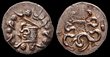
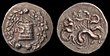
LYDIA, Tralleis. Circa 166-67 BC. Silver Tetradrachm (12.68g). Cistophoric type. Dion, magistrate. Cista mystica with serpent within ivy wreath / Two serpents entwined around bow and quiver; (A)ION above, TRA(A) to left, kithara to right. Kurth S463; SNG Copenhagen 657. VF. An amazing old cabinet grey toning with golden hues on the details. This tetradrachm was struck at Tralleis in Lydia around 166-67 BC and belongs to the celebrated cistophoric series first associated with the Attalid kingdom. Issued under the magistrate Dion, it combines Dionysiac mystery symbolism with clear civic signatures, reflecting both deep local tradition and the city's strategic role in the Roman-dominated East. A well-preserved, attractively toned piece, it is a refined example of the sophisticated silver coinage of 2nd century BC Asia Minor. For the type and most recently sold example see; CNG Auction 585, lot 159, hammered US$500. (P)
| AVAILABLE at A$400 | ||
| 10043 |
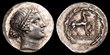
AEOLIS, Kyme. Circa 165-140 BC. Silver Tetradrachm (16.72g). Stephanophoric type. Straton, magistrate. Head of the Amazon Kyme right, wearing taenia / Horse prancing right; one-handled cup below raised foreleg; all within wreath. Oakley dies 39/g; SNG Copenhagen -; Pozzi 2303 (same obv. die). A very attractive piece. Lightly toned. aEF. This tetradrachm, struck under the magistrate Straton, belongs to a moment when Kyme combined strong civic pride with refined Hellenistic style. More than a simple currency, it served as a polished statement of the city's identity and standing in a landscape of shifting alliances. (P)
| SOLD at A$2100 | ||
| 10044 |
AEOLIS. Myrina. Circa 160-143 BC. Silver Tetradrachm (16.70g). Laureate head of Apollo right / MYRINAION, Apollo Grynios standing right, holding laurel branch in his left hand and phiale in his right; at his feet to right, omphalos and amphora; in field to left, monogram of KAI; all within laurel wreath. Sacks Issue 29; SNG Copenhagen 222; SNG von Aulock 1665. Some weakness, otherwise perfectly centred on a broad flan and attractively toned. gVF. (P)
| SOLD at A$1900 | ||
| 10045 |
ATTICA, Athens. Circa 165-42 BC. Silver Tetradrachm (16.62g). New Style coinage. Diopha- and Diodo-, magistrates. Struck 144/3 BC. Helmeted head of Athena Parthenos right / Owl standing right, head facing, on amphora; magistrates' names across field; to left, Apollo standing left, holding bow; [letter on amphora], ME below; all within wreath. Thompson 195a (same obverse die); HGC 4, 1635. gVF for this issue. Far superior to the only other example found in CoinArchives for the issue. For the issue see; CNG Auction 512, lot 125, hammered US$400.
| SOLD at A$1150 | ||
| 10046 |
CARIA, Myndos. Mid 2nd century BC. Silver Trihemiobol (1.04g). Theodotos, magistrate. Head of youthful Dionysos right, wearing ivy wreath / Grape bunch. Cf. HN Online 1739; cf. BMC 14; cf. Karl 274 (different magistrate); cf. SNG Keckman 244 (illegible magistrate). Undoubtedly among the finest known for this type in both preservation and strike quality. Moreover, the reverse appears to bear an unusual legend that may represent an unlisted variety, a feature that clearly merits further scholarly study. aEF. This silver trihemiobol was struck at Myndos, a small but self-aware coastal city of Caria that maintained its own coinage despite larger imperial powers in the background. The magistrate's name points to the hands-on role of local officials in supervising the mint, a classic hallmark of the Greek polis. Modest in value but widely used in daily trade, pieces like this quietly sustained regional commerce while reinforcing Myndos' own civic identity. For the most similar example see; Nomos Auction 20, lot 126, hammered US$400. (P)
| AVAILABLE at A$200 | ||
| 10047 |
IONIA, Herakleia ad Latmon. Circa 150-142 BC. Silver Tetradrachm (16.88g). Stephanophoric type. Helmeted head of Athena right / Club; below, owl flanked by two monograms; all within oak wreath. SNG von Aulock 1976-1977; SNG Lockett 2824. A very attractive grey-golden toning. EF. A very handsome coin in hand. This silver tetradrachm from Herakleia ad Latmon in Ionia belongs to the stephanophoric, or wreath-bearing, series, named for the wreath that encircles the reverse type. Issued in a period of renewed civic pride under Roman influence, it combines refined Hellenistic artistry with a strong sense of local identity and reflects Herakleia's place in the vibrant trade and political networks of Asia Minor. (P)
| SOLD at A$3400 | ||
| 10048 |
ISLANDS OFF THRACE, Thasos. Circa 148-90/80 BC. Silver Tetradrachm (16.82g). Head of youthful Dionysos right, wearing taenia and wreath of ivy and fruit / Herakles standing facing, head left, holding club in his right hand and with lion skin draped over his left arm; in inner left field, monogram. HGC 6, 359. Prokopov Group XVI, - (V DD15/R -). SNG Copenhagen 1046-1048. Beautifully toned and of excellent style. The reverse struck slightly off centre, otherwise gVF. This Thasos tetradrachm was issued in the name of tradition but driven by the commercial ambitions of a new age, neatly capturing the tension between classical legacy and Roman-era pragmatism. It is a coin of a city thriving on the strength of its past while carefully navigating the shifting tides of Mediterranean power. For the type see; Leu Auction 20, lot 445, hammered US$2,150. (P)
| SOLD at A$1000 | ||
| 10049 |
KINGS OF MACEDON. Alexander III the Great, 336-323 BC. Silver Tetradrachm (16.75g). Rhodes mint. Stasion, magistrate. Struck circa 201-190 BC. Head of Herakles right, wearing lion-skin headdress / Zeus seated left on low throne, holding long sceptre in his left hand and eagle standing right, wings closed, in his right; to left, rose; below throne, PO. Price 2517. Beautifully toned, with attractive full Hellenistic style. EF. For the type and most recently sold example see; Leu Auction A15, lot 57, hammered US$3,450. This tetradrachm embodies the lasting legacy of Alexander the Great, whose image and authority continued to shape the Hellenistic world long after his death. More than a medium of exchange, it is a compact symbol of an empire that survived not only in its territories, but also in its coinage. (P)
| SOLD at A$1150 | ||
| 10050 |
Thessaly, Thessalian League. Late 2nd to mid 1st century BC. Silver Stater (6.40g). Menedemos and Pherekrates Neoteros, magistrates. Head of Zeus right, wearing oak wreath, legend to left / Athena Itonia advancing right, holding spear and shield; across fields in four lines, NI in inner right field. BCD Thessaly II 831. An amazing old cabinet toning. aEF. (P)
| SOLD at A$850 | ||
| 10051 |
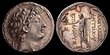
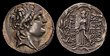
SELEUKID EMPIRE. Antiochos VIII Epiphanes (Grypos). 121/0-97/6 BC. Silver Tetradrachm (16.38g). Ptolemais (Ake) mint. Struck circa 121/0-113 BC. Diademed head right / Zeus Ouranios, drapery around waist, standing left, holding star and sceptre; monogram to outer left; all within wreath. SC 2336.2a; HGC 9, 1197h. Attractively toned, with very light porosity. gVF.
| SOLD at A$425 | ||
| 10052 |
SELEUKID KINGS OF SYRIA. Antiochos VIII Epiphanes (Grypos). 121/0-97/6 BC. Silver Tetradrachm (16.72g). Ptolemais (Ake) mint. Struck circa 121/0-113 BC. Diademed head right / Zeus Ouranios standing left, holding star and sceptre; monogram to outer left; all within wreath. SC 2336.2a; HGC 9, 1197h. Superb EF. Incredible old cabinet toning with golden and bluish hues across the devices. Well centered on a broad flan of excellent metal. This tetradrachm was struck at Ptolemais (Ake) in the early years of Antiochos VIII Epiphanes and perfectly captures the late Seleukid blend of royal image and religious message. With Zeus Ouranios invoked as a celestial guardian of kingship, it reflects a dynasty in troubled times still keen to project cosmic legitimacy and power. A rare and impressive piece from the last flowering of Seleukid authority on the eastern Mediterranean stage. (P)
| SOLD at A$1250 | ||
| 10053 |
KINGS OF CAPPADOCIA. Ariarathes VII Philometor. Circa 107/6-101/0 BC. Silver Tetradrachm (16.71g). In the name and types of Antiochos VII of Syria. Mint A (Eusebia-Mazaka). Struck circa 107/6-104/3 BC. Diademed head right / Athena Nikephoros standing left; monogram above A to outer left, O to inner left, (A) to inner right; all within laurel wreath. Lorber & Houghton Series 1, Issue 3, 121-151 (obverse die A6); SC 2148; HGC 7, 829; HGC 9, 1069. Well centred and struck on sound metal, with a lovely old cabinet toning. aEF. This tetradrachm, struck in the name and style of Antiochos VII of Syria, was in fact issued by Ariarathes VII Philometor, king of Cappadocia, and is a clear piece of political theatre in silver. By borrowing the imagery and titles of the former Seleukid ruler, Ariarathes claimed legitimacy and continuity with the wider Hellenistic royal tradition while steering through a period of dynastic tension and Seleukid interference. Struck at the Cappadocian capital of Eusebia Mazaka, it shows how Cappadocian rulers tried to preserve their independence by echoing the prestige of past empires, turning coinage into a vehicle for both memory and message in the late Hellenistic world. (P)
| SOLD at A$525 | ||
| 10054 |
MYSIA, Pergamon. Circa 104-98 BC. Silver Tetradrachm (12.61g). Cistophoric standard. Cista mystica within ivy wreath / Two serpents entwined around bow and bowcase; (A)I above, civic monogram left, serpent-entwined thyrsos right. Kleiner, Hoard 12; Pinder 95; SNG BN 1719. Beautiful old cabinet toning. gVF. Pergamon's cistophori, with their distinctive Dionysiac imagery, became the staple silver coinage of Roman Asia and circulated widely after 133 BC. (P)
| SOLD at A$375 | ||
| 10055 |
THRACE, Odessos. Circa 80-72/1 BC. Silver Tetradrachm (16.42g). In the name and types of Alexander III of Macedon. Lako(n), magistrate. Time of Mithradates VI of Pontos. Head of Herakles right, with the features of Mithradates VI of Pontos, wearing lion-skin / Zeus Aetophoros seated left. Callatay Group 3, dies D4/R3; Topalov, Odesos 80; Price 1193; HGC 3.2, 1589. Attractively toned. Encapsulated by NGC, certification 4885161-001, graded AU (Strike: 4/5, Surface: 4/5), with accompanying NGC photograph.
| SOLD at A$750 | ||
| 10056 |
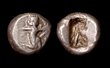
PERSIA, Achaemenid Empire. Temp. Darios I to Xerxes I. Circa 505-480 BC. Silver Siglos (5.38g). Lydo-Milesian standard. Sardes mint. Persian king or hero, wearing kidaris and kandys, quiver over shoulder, in kneeling-running stance right, drawing bow / Incuse punch. Carradice Type II (pl. XI, 12); Meadows, Administration 320; BMC Arabia pl. XXVII, 23; Sunrise 21. A very attractive old cabinet toning. aVF. Under Darius I (522-486 BC) and Xerxes I (486-465 BC), the Achaemenid Empire stood at its peak. Darius tightened control over a vast realm with strong administration, major roads, and standardised coinage, while Persepolis rose as the empire's showpiece capital. Xerxes inherited that power and carried it forward, presiding over an empire that blended the cultures of its many lands, from Egypt to India, and left a monumental legacy in stone and tradition. (P)
| SOLD at A$325 | ||
| 10057 |
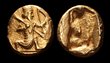
ACHAEMENID EMPIRE. Time of Xerxes II-Artaxerxes II. Circa 420-375 BC. Gold Daric (8.39g). Sardes mint. Persian king or hero in kneeling-running stance right, holding spear in right hand and bow in left; wearing kidaris and kandys, quiver over shoulder; long drapery curves from left knee to right ankle, obscuring right knee / Irregular rectangular incuse punch. Carradice Type IIIb, Group C; Sunrise 28. Struck on a broad, oblong flan, from dies of refined style. An incredible example for the type. gVF. This gold daric, struck circa 420-375 BC under Xerxes II to Artaxerxes II, belongs to the classic royal series first introduced by Darius I. Issued when the Persian Empire stretched from the Indus to Asia Minor, it served as high-value bullion for major payments and military needs while also broadcasting royal power. The dynamic kneeling-running king with spear and bow presents the Great King as a vigilant, divinely favoured warrior, an image widely recognised across the eastern Mediterranean and even mentioned in Greek literature as a symbol of Persian imperial prestige. For a recent sold example of the type see; Heritage Auction 3109, lot 31031, hammered US$18,000. (P)
| SOLD at A$4300 | ||
| 10058 |
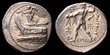
PHOENICIA, Byblos (Gebal). 'Ozba'al. Circa 400-365 BC. Silver Shekel (13.06g). Three hoplites bearing shields upon a galley left above waves, the prow terminating in a lion's head; below, hippocamp left above murex shell, Phoenician zayin above the dorsal fin / Lion attacking bull left. E&E-B Series IV.2.1.c; HGC 10, 133 corr. Apparently an unpublished die combination. This shekel is a striking expression of Byblos' seafaring strength and civic pride, uniting an impressive martial galley scene with marine emblems deeply tied to the city's identity, while the forceful lion attacking bull reverse gives the issue a powerful and distinctly Phoenician presence. Lightly toned and a little off-centre on the obverse. VF. (P)
| SOLD at A$4800 | ||
| 10059 |
CILICIA, Tarsos. Tarkumuwa (Datames). Satrap of Cilicia and Cappadocia, 384-361/0 BC. Silver Stater (10.72g). Struck circa 375 BC. Baaltars seated right, torso facing, holding grain ear and grape bunch in extended right hand, cradling eagle-tipped sceptre in left arm; B'LTRZ (in Aramaic) to left, thymiaterion in background; all within crenellated wall / Satrap seated right, wearing Persian dress, testing arrow held in both hands; TRKMW (in Aramaic) to left, winged solar disk with volutes to upper right, bow to lower right. Casabonne Series 2; Moysey Issue 6, dies 1/- (unlisted reverse die); SNG France -; SNG Levante 86; Sunrise 52 (this coin). Lightly toned. Superb EF. This stater was struck under Tarkumuwa, better known by his Greek name Datames, one of the most capable Achaemenid commanders of the 4th century BC. Its types neatly fuse local and imperial messages: Baaltars of Tarsos, with his grain, grapes and thymiaterion, speaks of civic prosperity and sacred favour, while the satrap in Persian dress testing an arrow on the reverse captures aristocratic virtue and military readiness. With Aramaic naming both god and ruler, it is a concise and powerful piece of Persian statecraft seen through a Cilician lens. (P)
| SOLD at A$2200 | ||
| 10060 |
CILICIA. Tarsus. Datames, as Satrap (385/4-362/1 BC). Silver stater (10.63g). Struck ca. 378-372 BC. Female head, hair in sphendone and wearing necklace, facing slightly left / Helmeted and bearded male head right (Ares?); grape bunch to left, ethnic to right. SNG Levante -. SNG von Aulock 5937 var. (grape bunch). Unpublished with grape bunch to left on reverse. aEF. A choice cabinet blue-grey toning. Issued at Tarsus during the satrapy of Datames. This silver stater stands as a remarkable testament to one of the most capable and independent-minded governors of the Achaemenid Empire. Struck circa 378-372 BC, during a time of political unrest and local assertion against imperial authority, this coin reflects Datames' efforts to solidify his power and regional identity while still operating nominally under Persian rule. As both a military commander and a skilled administrator, Datames balanced loyalty to the Great King with ambitious local governance. His coinage, marked by a distinct blend of Persian and Hellenic influences, speaks to a dynamic moment in Anatolian history when satraps like Datames began to express their autonomy through artistic and political mediums, setting the stage for the eventual fragmentation of Persian control in the region. For the exact type see; Heritage Auction 3035/29101, hammered US$3750. From the Titan Collection. (P)
| SOLD at A$2700 | ||
| 10061 |
ARMENIA MINOR. Mithradates. Satrap, circa 212 BC. Bronze Tetrachalkon (5.33g). Head left, wearing bashlyk / Bee. Kovacs 295. Dark green-brown patina. VF. Very rare. Kovacs assigned this very rare and puzzling coin to Armenia Minor, seeing its wearer's bashlyk and the Aramaic legend as pointers to a satrap rather than a fully fledged king, in line with parallels from Arsakes I in Parthia and Artaxias in Armenia. Earlier, however, W. Museler had suggested a different story, linking the piece to the Persian noble Mithradates III of Cius, who escaped Antigonus' purge in 302, carved out a base in Paphlagonia, and later emerged as Mithradates I Ktistes of Pontos. In that scenario, the Aramaic would sit comfortably beside the issues of Ariarathes I of Cappadocia, who likewise moved from satrap to king. The bee reverse, more at home in 4th-3rd century contexts than in later periods, quietly supports Museler's view, even though the catalogue here still follows Kovacs' traditional attribution. For the type and similar condition see; Nomos Auction 18, lot 241, hammered USD 2,200. (P)
| AVAILABLE at A$400 | ||
| 10062 |
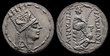
KINGS OF ARMENIA. Official Commagene imitation struck under Antiochos I of Commagene. Tigranes II the Great, 95-56 BC. Silver Tetradrachm (15.52g). Uncertain mint, possibly Samosata. Struck circa 69-56 BC. Diademed and draped bust of Tigranes right, wearing Armenian tiara decorated with star between two eagles / BASILEOS TIGRANOU, Tyche of Antioch seated right on rock, holding laurel branch; river-god Orontes swimming right below; TP monogram in inner right field; all within wreath. Kovacs 123; M&D 49; CAA 24-5 and 40-1; AC 35; SCADA Group 6, obverse die A48. Extremely rare. A magnificent specimen of this important official imitation issue, sharply struck and unusually well preserved, with a bold portrait, finely detailed reverse and amazing old grey cabinet toning. Among the many examples of this type seen and reviewed in recent years, this piece remains the finest known specimen. Notably, the coin had already been certified by NGC approximately five years before its appearance in Herakles Auction 2, a significant detail not recorded in that sale description. gEF. Acquired by the consignor, whose collection we are pleased to present, and regarded as one of the final major coins purchased during more than 50 years of collecting. Acquired from Herakles Auction 2, Germany, lot 55, hammered A$12,300.
| SOLD at A$17250 | ||
| 10063 |
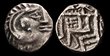
ARABIA, Eastern. Oman Peninsula. Mleiha or ad-Dur (?). Circa 100 BC-A.D. 100. Billon Drachm (3.65g). Imitating Alexander III of Macedon. Stylized head of Herakles right, wearing lion-skin headdress / Male figure seated left on low throne, holding long sceptre in his left hand and a horse on his right arm; to left, palm stem; to left, below right arm, anchor-like symbol of Mleiha (?) placed sideways. Arnold-Biucchi 26. VF for the type. This coin imitates the celebrated coinage of Alexander the Great, a clear sign of how long Hellenistic imagery remained trusted and influential in the region. Likely struck to support trade across the Arabian Gulf and wider routes, it uses familiar types to ease acceptance in markets accustomed to Greek designs. More than a simple copy, it shows local authority adopting a powerful visual language to signal legitimacy and participate in broader economic and cultural networks. Far superior to the most recently sold example of the type at Savoca Auction A270 (25 May 2025), lot 191, and to those in CoinArchives. (P)
| SOLD at A$200 | ||
| 10064 |
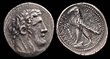
PHOENICIA. Tyre. Circa 126/5 BC-A.D. 65/6. Silver Shekel (13.98g). Dated Civic Year 51 (76/5 BC). Laureate head of Melqart right, lion-skin knotted around neck / TYROU IERAS KAI ASYLOU, eagle standing left on prow, palm over right wing; AN (date) above club in left field, A in right field, Phoenician alef between legs. DCA Tyre 183. Beautifully centred, with an unusually complete reverse and very attractive deep old cabinet toning. As fine an example as can be found of this iconic series. EF for the issue. Tyrian silver shekels form one of the most historically charged coinages of the ancient world. Struck to a consistently high standard of weight and purity, they became the preferred trade and temple coin of the eastern Mediterranean and are widely regarded as the most likely candidate for the 'thirty pieces of silver' of the New Testament. Their types, with Melqart as the tutelary god of Tyre on the obverse and the proud eagle on ship's prow on the reverse, encapsulate both the city's religious traditions and its maritime, commercial power. As such, each shekel stands at the intersection of Phoenician identity, regional commerce and the religious history of Second Temple Judea. For the same type and issue see; Heritage Auction 3100, lot 35029, hammered US$6,500. (P)
| SOLD at A$2200 | ||
| 10065 |
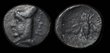
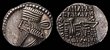
KINGS OF PARTHIA. Pakoros I. Circa A.D. 78-120. Silver Drachm (3.84g). Ekbatana mint. Diademed bust left, wearing long, pointed beard / Archer (Arsakes I) seated right on throne, holding bow; monogram below bow; archer's seat single line. Sellwood 78.5 (Vologases III); Sunrise -; Shore 415 (Vologases III). Attractively toned, struck in high relief on a large flan and needle-sharp, gEF. A marvellous specimen. (P)
| SOLD at A$200 | ||
| 10066 |
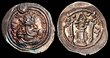
SASANIAN KINGS. Valaxs (Balash). A.D. 484-488. Silver Drachm (4.05g). Struck circa A.D. 485-488. Bust right, wearing mural crown with korymbos set on crescent, ribbon on left shoulder, flames on right / Fire altar with ribbons and head of Balash right on shaft; attendants flanking, star and crescent flanking flames. SNS type IIa/1e; Sunrise -. Wonderfully toned. aEF. (P)
| SOLD at A$130 | ||
| 10067 |
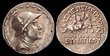
BAKTRIA. Greco-Baktrian Kingdom. Eukratides I Megas. Circa 170-145 BC. Silver Tetradrachm (16.87g). Helmeted, diademed, draped and cuirassed bust right / The Dioskouroi, holding palm fronds and spears, on horses rearing right; monogram in lower right field. Bopearachchi 6E; Bopearachchi & Rahman 240-242; SNG ANS 465; MIG Type 177ee; HGC 12, 131. Iridescent toning with underlying lustre. aEF. This silver tetradrachm of Eukratides I Megas belongs to the moment when he emerged as the dominant power in the Greco-Baktrian world and set out to redefine kingship on the eastern fringes of the Hellenistic realm. It is not merely currency; it is a deliberate statement of royal ambition, designed to place Eukratides on a level with the great Hellenistic monarchs and to project his authority from the edge of the Greek world deep into Central Asia. (P)
| SOLD at A$1500 | ||
| 10068 |
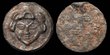
ASIA MINOR. Uncertain. Circa 3rd-1st centuries BC. Lead Tessera (13.98g). Facing gorgoneion / Blank. A large, attractive and impressive piece with an incredible green patina. The finest known example. The Gorgoneion, usually the head of Medusa, was one of the Greeks' most common protective symbols. With its staring eyes and wild snake-like hair, it was meant to frighten off evil and bad luck. It appears throughout antiquity, on shields and armour, on temples, and on coins, used as a bold sign of protection and supernatural power from the Archaic period through the Hellenistic age. (P)
| SOLD at A$100 | ||


| Next | Last | Index |