 |
 |
 |
| * Unsold lots available for sale at indicated reserve plus 22% buyer's commission plus postage & insurance.Loading... | First | Previous | Next | Last | Index |
| LITERATURE & CATALOGUES: GREEK | ||||
| Lot | Description | Status | ||
| 13903 |
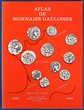
Atlas de Monnaies Gauloises. Henri de La Tour, centenary reprint and updated edition, Paris, Claude Burgan (Maison Florange), 1992 (orig. 1892), with updates by Brigitte Fischer (CNRS). Paperback. The classic plate atlas underpinning modern Celtic numismatics, reproducing the De La Tour engravings and arranging the coinage of ancient Gaul by regions and tribes (Gaule Belgique, Celtique, Aquitaine, Narbonnaise), with c. 2,000 illustrations across 55 plates covering staters, drachms, bronzes, and fractions. The centenary edition adds a new foreword and introduction on the project?s origins (Cabinet des M?dailles, Biblioth?que Nationale), editorial corrections, explanation of signs and abbreviations, and improved alphabetical tables and indices. Near new, with only slight cover rub and tiny shelfwear, contents clean and complete.
| AVAILABLE at A$100 | ||
|---|---|---|---|---|
| 13904 |
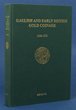
Gaulish and Early British Gold Coinage by Dr John Sills, Spink, London, 2003. A substantial and highly important reference work on Celtic gold coinage, covering the series from the arrival of the Philippus in Gaul to the opening of the Gallic Wars, with particular attention to north-eastern France and southern Britain. The volume runs to xii, 554 pages and is extensively illustrated throughout, with photographs of approximately 540 coin types and varieties, many previously unpublished, together with reconstruction drawings of more than 200 die pairs, 17 plates, 40 maps including a folding map, 123 figures and 39 tables. Sills brings together classification, die study, hoard evidence, distribution mapping and historical background into a work of real depth, including a catalogue of around 3,000 recorded examples and detailed analysis of 80 hoards. A serious and beautifully produced Spink publication, and still one of the key standard references for Gaulish and early British gold. About new.
| AVAILABLE at A$100 | ||
| 13905 |
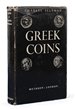
Greek Coins: A History of Metallic Currency and Coinage Down to the Fall of the Hellenistic Kingdoms. (London, Methuen, 1960). Hardcover, 311 pages with 64 plates, in dust jacket. A classic narrative survey of Greek monetary history, tracing the development of metallic currency and coinage from the earliest issues through to the end of the Hellenistic kingdoms, written to explain how coinage evolved in response to commerce, warfare, state finance, and shifting political power across the Greek world. Particularly useful as a broad framework text, it ties types and series to historical context while the extensive plates provide solid comparative material for style, fabric, and major iconographic themes, making it a dependable companion to more specialised catalogues and a helpful reference for collectors who want the bigger story behind the coins. Paper cover with light wear and shelf dust, dust jacket with minor edge wear, original book cover is in great condition, overall VG from many years of use. From the personal reference library of David Allen, a well known numismatist, formed over more than 50 years and used as a long term reference for research, attribution, and catalogue work.
| SOLD at A$60 | ||
| 13906 |
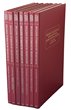
Sylloge Nummorum Graecorum, Denmark, The Royal Collection of Coins and Medals, Danish National Museum (SNG Copenhagen), John Goddard, seven-volume Sunrise Publications edition (West Milford, New Jersey, 1981?1982), bringing together the first thirty-nine Copenhagen fascicules in uniform folio volumes and presenting the Danish National Museum?s Greek coin collection in the classic SNG format of full-page photographic plates with concise facing catalogue text, a cornerstone tool for attribution and comparison that is routinely cited across the literature, dealer catalogues and auctions, and often described in the trade as one of the largest and most comprehensive SNG corpora, with the seven volumes together comprising about 463 plates illustrating roughly 20,000 coins across a very broad geographical spread. Clain-Stefanelli 1912* (the asterisk used to mark titles recommended for a core numismatic library). Condition is exceptionally fresh overall, with clean, crisp interiors and only minimal shelf or handling traces to the exteriors. From the personal reference library of David Allen, a well known numismatist, formed over more than 50 years and used as a long term reference for research, attribution, and catalogue work.
| SOLD at A$500 | ||
| 13907 |
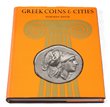
Greek Coins and Cities. Norman Davis (Seattle and London, Spink and the Seattle Art Museum, 1967). 221 pages. An engaging introduction to Greek coinage told through the civic identities behind it, presenting 110 coins from the Seattle Art Museum collection, each illustrated and described in depth alongside the historical background of the issuing city, so that types, legends, and imagery are read in context rather than as isolated collectibles. The book is particularly strong as a teaching and reference tool because it pairs clear photography with substantial commentary and frequent enlargements that bring out style, fabric, and iconographic detail, making it useful both for newcomers building a framework and for collectors wanting well written city-by-city context for familiar series. Paper cover with tiny tears, original book cover is in great condition, overall VG from many years of use. From the personal reference library of David Allen, a well known numismatist, formed over more than 50 years and used as a long term reference for research, attribution, and catalogue work.
| SOLD at A$75 | ||
| 13908 |
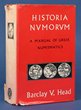
Historia Numorum: A Manual of Greek Numismatics. Barclay V. Head (Chicago, Argonauts Inc. Publishers, 1967). Hardcover. The classic handbook of Greek numismatics in a widely used reprint edition, long valued as a broad and dependable framework reference for mints, regions, and principal series across the Greek world, and an essential companion to more specialised catalogues for attribution, comparison, and general research. Covers with light wear and shelf dust, spine fading, showing age and use; with some light pencil underlining and a little page creasing from use, though the binding remains sound and the pages largely clean; overall the book is in VG condition. From the personal reference library of David Allen, a well known numismatist, formed over more than 50 years and used as a long term reference for research, attribution, and catalogue work.
| AVAILABLE at A$75 | ||
| 13909 |
Greek Numismatics and Archaeology: Essays in Honor of Margaret Thompson. Otto Morkholm and Nancy Waggoner (eds.) (Wetteren, 1979). Large quarto, 326 pages with frontispiece portrait and 41 plates, in green cloth. A substantial Festschrift bringing together important studies that connect Greek coinage with archaeological context across a wide range of series and problems, and a useful illustrated reference volume for research, comparison, and scholarly consultation. Covers with light wear and shelf dust, spine fading, showing age and use; overall the book is in VG condition. From the personal reference library of David Allen, a well known numismatist, formed over more than 50 years and used as a long term reference for research, attribution, and catalogue work.
| SOLD at A$40 | ||
| 13910 |
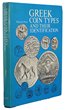
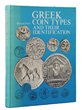
Greek Coin Types and Their Identification. Richard Plant. London, Seaby Publications Ltd., 1979, first edition. Paperback. ISBN 0-900652-47-0. A highly practical, type-based identification handbook for ancient Greek coinage, grouping nearly 3,000 coins by reverse designs (objects, animals, deities, buildings, etc.) rather than by region, making it especially useful for worn or legendless pieces. Includes a clear introductory guide to the Greek alphabet and numerals, legends and abbreviations, and denominations, followed by a thematic catalogue with illustrations and basic data for each type, supported by indexes, plates, a short mythological guide, glossary, city index, and conversion tables. Extremely fine, very fresh, with only a tiny corner crease to the rear cover.
| SOLD at A$50 | ||
| 13911 |
Greek, Semitic, Asiatic Coins and How to Read Them. Richard J. Plant. Amherst, New York, Scorpion Publishers, 1979, first edition. Hardback, 257 pages. A very practical handbook for reading coin legends, dates, mints, and titles across a wide range of scripts, set out as a working guide rather than a regional catalogue. Plant moves from Greek and related alphabets, to Semitic scripts and their coinages, then through the major Indian alphabets and series, and finishes with Chinese-character coinage, including the cash issues of China and neighbouring traditions. Transliteration tables, common legend patterns, ruler titles, and worked examples run throughout, with exercises and an answer section and a good index at the back, making it a genuinely useful desk reference when a legend is the key to attribution. A very presentable, especially nice for this title, with clean pages and a well-kept cover.
| SOLD at A$100 | ||
| 13912 |
Greek Coins. Colin M. Kraay, photography by Max Hirmer (London, Thames and Hudson, 1966). 396 pages with 220 plates, including 20 in colour, 1,329 photographs, and four maps, in original brown linen with dust jacket. A classic and visually outstanding survey of Greek coinage, especially prized for the remarkable quality of Hirmer?s photography and the exceptional depth of illustration, and still highly useful as a practical reference for the quick comparison of style, fabric, and major types across the Greek world. An important and handsome volume, valued both for its scholarly usefulness and for the strength of its photographic record. Covers with light wear and shelf dust, spine fading, showing age and use; overall the book is in VG condition. From the personal reference library of David Allen, a well known numismatist, formed over more than 50 years and used as a long term reference for research, attribution, and catalogue work.
| SOLD at A$300 | ||
| 13913 |
A Guide to the Principal Coins of the Greeks from circ. 700 B.C. to A.D. 270, based on the work of Barclay V. Head. (London, Trustees of the British Museum, 1965). Large octavo, 108 pages of text with 52 plates illustrating numerous coins, issued by the British Museum, Department of Coins and Medals. A handy and well illustrated guide to the principal Greek coin types and series across the wider classical period, especially useful for quick identification and as an accessible companion to the larger standard catalogues. Practical in format and strongly plate driven, it remains a dependable working reference for collectors, students, and cataloguers needing a clear survey of the main Greek issues in one compact volume. Covers with light wear and shelf dust, spine fading, showing age and use; overall the book is in VG condition. From the personal reference library of David Allen, a well known numismatist, formed over more than 50 years and used as a long term reference for research, attribution, and catalogue work.
| SOLD at A$40 | ||
| 13914 |
Ancient Greek Coins (The World of Numismatics). G. K. Jenkins (London, Barrie & Jenkins, 1972). Hardcover, 310 pages, many illustrations, 25 ? 19 cm. A well illustrated and collector friendly introduction to Greek coinage, offering clear coverage of the major series, regions, and themes of the Greek world, and useful both as a readable overview and as a practical visual reference for identification and comparison. Covers with light wear and shelf dust, spine fading, showing age and use; dust jacket present and well kept, with minimal foxing to the page edges and a small county library stamp to the copyright page; overall the book is in VG condition. From the personal reference library of David Allen, a well known numismatist, formed over more than 50 years and used as a long term reference for research, attribution, and catalogue work.
| SOLD at A$45 | ||
| 13915 |
Greek Coin Types and Their Identification. Richard Plant (1979). Hardcover, 343 pages. A highly practical identification manual, built around thousands of crisp line drawings arranged by type categories, and designed to allow rapid matching of devices even when coins survive with only partial legends, worn surfaces, or weak strikes. Especially useful as a true bench reference, it remains one of those working books that saves real time when sorting and attributing Greek material, offering a clear and efficient visual system for handling a wide range of types across the Greek series. Covers with light wear and shelf dust, spine fading, showing age and use; overall the book is in VG condition. From the personal reference library of David Allen, a well known numismatist, formed over more than 50 years and used as a long term reference for research, attribution, and catalogue work.
| SOLD at A$40 | ||
| 13916 |
Ancient Greek Numismatics: A Guide to Reading and Research. William E. Daehn (Cold Spring, MN, Davissons Ltd., 2001). Paperback, [vi] + 401+ pages. A highly practical English language bibliography for Greek numismatics, compiling more than 4,000 entries arranged by geographical region and giving full bibliographic details for each, with a useful summary of contents that makes it far easier to judge what is worth pursuing for a particular mint, city, district, kingdom, or tribe. The volume also includes a full concordance with the Clain-Stefanelli bibliography, together with strong indexes to cities, districts, kingdoms, tribes, authors, and collectors, making it an especially valuable desk reference for serious attribution and research rather than casual reading, and one of those working tools that proves its usefulness again and again in a specialist library. Covers with light wear and shelf dust, spine fading, showing age and use; overall the book is in VG condition. From the personal reference library of David Allen, a well known numismatist, formed over more than 50 years and used as a long term reference for research, attribution, and catalogue work.
| SOLD at A$40 | ||
| 13917 |
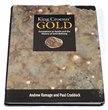
King Croesus? Gold: Excavations at Sardis and the History of Gold Refining. Hardcover, 272 pages. A beautifully researched and highly readable study that links the legendary wealth of Lydia to the real industrial and scientific story behind it, drawing on the Harvard Cornell Sardis Expedition?s discovery of a sixth-century B.C. gold refinery where alluvial gold from the Pactolus River was processed to produce refined gold and silver. The authors present a full archaeological report of the only known ancient refinery of its kind, paired with a detailed scientific reconstruction of the refining methods undertaken with British Museum study, then broaden the discussion into an authoritative survey of early assaying and refining techniques from across the ancient world. The result is both a key reference for the origins of coinage and an unusually strong introduction to ancient metallurgy, with Sardis providing rare, concrete evidence for technologies often known only through texts. Paper cover with tiny tears, original book cover is in great condition, overall VG from many years of use. From the personal reference library of David Allen, a well known numismatist, formed over more than 50 years and used as a long term reference for research, attribution, and catalogue work.
| SOLD at A$40 | ||
| 13918 |
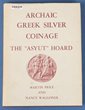
Archaic Greek Silver Coinage: The Asyut Hoard. Martin Price and Nancy Waggoner (London, Vecchi, 1975). Hardcover with dust jacket, 32 plates, 25.5 ? 19 cm. The standard reconstruction of the dispersed Asyut Hoard, one of the most important finds for the study of early Greek silver coinage, recording a major deposit of approximately 900 archaic silver coins discovered in Egypt in 1969 and painstakingly reassembled in scholarly form after dispersal through the documentation of some 500 pieces in London together with further surviving groups elsewhere. A fundamental reference for archaic Greek silver series, hoard evidence, and comparative numismatic research. Ex libris David Miller numismatic library. Covers with light wear and shelf dust, spine fading, showing age and use; overall the book is in VG condition. From the personal reference library of David Allen, a well known numismatist, formed over more than 50 years and used as a long term reference for research, attribution, and catalogue work.
| SOLD at A$40 | ||
| 13919 |
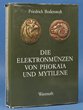
Die Elektronmunzen von Phokaia und Mytilene. Friedrich Bodenstedt (Tubingen, 1981). x, 390 pages with 63 plates, together with maps, tables, and indices, in green cloth with gilt and dust jacket. The standard reference for the electrum hekte coinage of Phokaia and Mytilene, long regarded as the essential tool for serious attribution, comparison, and study of these fascinating early issues. A major specialist work, still regularly sought after by collectors and researchers, and increasingly difficult to obtain in the market. An example appeared in CNG eAuction 371, lot 198, hammering at $180 excluding the buyer?s fee. Covers with light wear and shelf dust, spine fading, showing age and use; overall the book is in VG condition. From the personal reference library of David Allen, a well known numismatist, formed over more than 50 years and used as a long term reference for research, attribution, and catalogue work.
| SOLD at A$150 | ||
| 13920 |
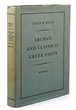
Archaic and Classical Greek Coins (The Library of Numismatics). Colin M. Kraay (1976). Hardcover, approximately 378 to 390 pages with 64 black and white plates. A major standard work on early Greek coinage, valued for its clear, authoritative treatment of the archaic and classical periods and its ability to place coin types, mints, and regional styles into a coherent historical and artistic framework, making it a dependable reference for attribution and broader study alike. Kraay?s approach balances scholarship with usability, guiding the reader through the development of Greek coinage across the major issuing regions, with the plates providing strong comparative material for identifying fabric, style, and type detail, and the text serving as a long term desk reference for collectors, cataloguers, and researchers working with the formative centuries of the Greek monetary world. Paper cover with tiny tears, original book cover is in great condition, overall VG from many years of use. From the personal reference library of David Allen, a well known numismatist, formed over more than 50 years and used as a long term reference for research, attribution, and catalogue work.
| SOLD at A$40 | ||
| 13921 |
The Archaic and Early Classical Coinages of the Cyclades. Kenneth A. Sheedy (London, Royal Numismatic Society, 2006). RNS Special Publication No. 40. Quarto, 261 pages with 20 plates, dust jacket over red linen with gilt spine lettering. An important modern study of one of the most fascinating and difficult areas of Greek numismatics, breaking new ground in the archaic and early classical coinages of the Cyclades and making highly effective use of a body of material that is notably scarce worldwide. A serious specialist reference for attribution, comparison, and research, and one respected by advanced collectors, with BCD noting both the difficulty of the subject and the author?s commendable achievement in bringing the series together. Daehn 4479. A comparable example appeared as lot 4293 in the Kreindler sale of 13 February 2014, hammering at EUR 130. Covers with light wear and shelf dust, spine fading, showing age and use; overall the book is in VG condition. From the personal reference library of David Allen, a well known numismatist, formed over more than 50 years and used as a long term reference for research, attribution, and catalogue wor
| SOLD at A$60 | ||
| 13922 |
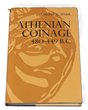
Athenian Coinage 480-449 B.C. Chester G. Starr (Oxford, Clarendon Press, 1970, first edition). 8vo, 95 pages with tables and 26 plates, in cloth with dust jacket. An important specialist study offering a new chronological arrangement of Athenian coinage for the crucial period from the aftermath of the Persian Wars through the mid fifth century, revising the earlier frameworks associated with Svoronos and Seltman and providing a tighter structure for the early ?owl? series and related issues. Highly useful for serious collectors and researchers, it combines clear argumentation with practical tables and strong plate coverage, making it a dependable working reference for dating, sequencing, and comparative study within one of the most studied coinages of the Greek world. Paper cover with light wear and shelf dust, original book cover is in great condition, overall VG from many years of use. From the personal reference library of David Allen, a well known numismatist, formed over more than 50 years and used as a long term reference for research, attribution, and catalogue work.
| SOLD at A$130 | ||
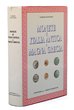
| 13923 |
Monete di Italia Antica e Magna Grecia. Eupremio Montenegro (Torino, Eupremio Montenegro Editore, 1996, first edition). A massive, single-volume Italian language reference covering the coinage of ancient Italy and Magna Graecia, presenting an encyclopedic run of types with individual listings and descriptive data that make it especially useful for day to day attribution, cataloguing, and price or type comparison across the pre-Roman and Greek issues of the peninsula. Compiled as a practical working catalogue, it brings together the series in a systematic way with extensive black and white illustration coverage, and has long been used by collectors and the trade as a dependable bench reference when sorting, identifying, and organising material by region, mint, and type. Paper cover with light wear and shelf dust, with a small split to the dust jacket lamination at the bottom of the spine, original book cover is in great condition, overall VG from many years of use. From the personal reference library of David Allen, a well known numismatist, formed over more than 50 years and used as a long term reference for research, attribution, and catalogue work.
| SOLD at A$75 | ||
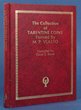
| 13924 |
Descriptive Catalogue of the Collection of Tarentine Coins Formed by M. P. Vlasto. Oscar E. Ravel (Chicago, 1977 reprint of the 1947 original). 195 pages with 53 plates, in red leatherette with gilt. The standard corpus of the Vlasto Tarentum collection, long valued as a practical reference for attribution and comparison, with plates and a clear catalogue structure that allow the user to match types, signatures, and series across one of the most important South Italian Greek coinages. Covers with light wear and shelf dust, spine fading, showing age and use, with the spine now missing; otherwise a fine, clean working copy. From the personal reference library of David Allen, a well known numismatist, formed over more than 50 years and used as a long term reference for research, attribution, and catalogue work.
| SOLD at A$75 | ||
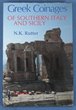
| 13925 |
Greek Coinages of Southern Italy and Sicily. N. K. Rutter (London, Spink, 1997). Octavo, 191 pages, illustrated throughout, in blue cloth with dust jacket. A thoughtful and highly useful survey of the Greek coinages of South Italy and Sicily from the later sixth century B.C. onward, using the numismatic record as a continuous guide to political and cultural development while exploring questions of identity, regional interaction, and the meaning of Greek civic coinage in a complex colonial landscape. Grounded in clear description and sound scholarship, it remains a practical and intelligent reference for interpreting types, legends, and series across this important field. Covers with light wear and shelf dust, spine fading, showing age and use; overall the book is in VG condition. From the personal reference library of David Allen, a well known numismatist, formed over more than 50 years and used as a long term reference for research, attribution, and catalogue work.
| SOLD at A$60 | ||
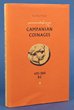
| 13926 |
Campanian Coinages: 475-380 B.C. N. K. Rutter (1979). Octavo, viii + 196 pages with 34 fine plates, hardbound in gilt lettered brown cloth with dust jacket. The standard reference and die study for the Campanian coinages of this important early period, long relied upon for attribution, comparison, and serious research, and still the essential starting point for detailed work on these South Italian issues. A scholarly and highly practical volume, valued both for its systematic treatment of the series and for the quality of its plates, and a book that remains firmly established in the specialist literature. Daehn 2695. Covers with light wear and shelf dust, spine fading, showing age and use; dust jacket faded at the edges with a small tear at the top edge of the upper cover, overall the book is in VG condition. From the personal reference library of David Allen, a well known numismatist, formed over more than 50 years and used as a long term reference for research, attribution, and catalogue work.
| SOLD at A$40 | ||
| 13927 |
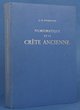
Numismatique de la Crete Ancienne, accompagnee de l?Histoire, la Geographie et la Mythologie de l?Ile. J. N. Svoronos (Bonn, 1972 reprint of the 1890 original). Hardcover, 376 pages with 38 plates, gilt lettering. A very important classic reference on the ancient coinage of Crete, uniting a substantial numismatic corpus with the wider historical, geographical, and mythological background of the island, and still regularly consulted and cited for the study of Cretan types, mints, and series. Covers with light wear and shelf dust, spine fading, showing age and use; overall the book is in VG condition. From the personal reference library of David Allen, a well known numismatist, formed over more than 50 years and used as a long term reference for research, attribution, and catalogue work.
| SOLD at A$75 | ||
| 13928 |
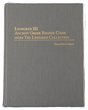
Lindgren III, Ancient Greek Bronze Coins from the Lindgren Collection. Henry Clay Lindgren (copyright 1993). Hardcover in dark cloth with gilt titles. A dedicated and highly practical reference for Greek bronze coinage, arranged as a working catalogue for attribution and comparison, and forming part of the well known Lindgren series valued for its clear treatment of difficult minor bronzes that are often not easily covered in the larger standard references. This copy is additionally inscribed by Henry Clay Lindgren, ?San Francisco, 2 January 2003,? adding a pleasing personal association to an already useful specialist volume. Covers with light wear and shelf dust, spine fading, showing age and use; overall the book is in VG condition. From the personal reference library of David Allen, a well known numismatist, formed over more than 50 years and used as a long term reference for research, attribution, and catalogue work.
| SOLD at A$40 | ||
| 13929 |
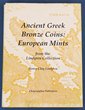
Ancient Greek Bronze Coins: European Mints from the Lindgren Collection. Henry Clay Lindgren (San Mateo, Chrysopylon Publishers, 1989). Large format (29 cm), xx + 89 pages with 89 plates, full cloth with titles to the front board, in dust jacket, a plate-rich reference drawn from the Lindgren Collection and especially useful for identification and comparison of European Greek bronze issues. Covers with light wear and shelf dust, spine fading, cloth with dust jacket, cover is good for the age and years of use, overall VF from many years of use, in excellent condition. From the personal reference library of David Allen, a well known numismatist, formed over more than 50 years and used as a long term reference for research, attribution, and catalogue work.
| SOLD at A$40 | ||
| 13930 |
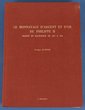
Le monnayage d?argent et d?or de Philippe II. Georges Le Rider. Quarto, 484 pages with 95 plates and one folding map. The standard reference for the silver and gold coinage of Philip II of Macedon, presented in a rigorous corpus style and placing the Macedonian mint output within a broader monetary history that continues into the opening years of Alexander, allowing the author to reconsider the usual break traditionally placed at 336 B.C. A major scholarly work for the study of Macedonian royal coinage, highly important for attribution, chronology, and wider monetary analysis. Inscribed by the author on the half title. Covers with light wear and shelf dust, spine fading, showing age and use; overall the book is in VG condition. From the personal reference library of David Allen, a well known numismatist, formed over more than 50 years and used as a long term reference for research, attribution, and catalogue work.
| SOLD at A$45 | ||
| 13931 |
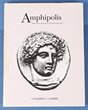
Amphipolis: The Civic Coinage in Silver and Gold. Catherine C. Lorber (Los Angeles, Numismatic Fine Arts International, Inc., 1990). Large format, 22 ? 29 cm, 196 pages with 31 superb plates, seven indices, bibliography, and three appendices, hardbound in brown cloth with gilt lettering and dust jacket. A major die study of Amphipolis, one of the most artistic civic coinages of ancient Greece, recording more than 100 tetradrachms and over 150 silver fractions with all known die combinations, illustrated with enlargements and comparison pieces, and including a separate listing of known forgeries. The volume also provides important sections on the history of Amphipolis, hoards, earlier scholarship, stylistic development, and the full catalogue, based on the earlier work of Willy Schwabacher and with a metrology contribution by Wayne E. McGovern, making it an essential and now difficult to obtain reference for serious work on the series. Covers with light wear and shelf dust, spine fading, showing age and use; overall the book is in VG condition. From the personal reference library of David Allen, a well known numismatist, formed over more than 50 years and used as a long term reference for research, attribution, and catalogue work.
| AVAILABLE at A$75 | ||
| 13932 |
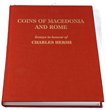
Coins of Macedonia and Rome: Essays in Honour of Charles Hersh. (London, Spink and Son Ltd, 1998). Hardcover in red cloth with gilt spine and cover titles, ISBN 1902040023, printed by Cultura, Wetteren, Belgium. A substantial Festschrift bringing together important specialist studies on Macedonian and related coinage, hoards, and historical problems, opening with a useful bibliography of the published work of Charles Hersh and followed by a strong series of contributed papers ranging across Macedonian royal and regional issues, Alexander coinage, and hoard evidence. A valuable research volume for attribution, chronology, and wider historical context, and a useful working reference for the specialist shelf. Covers with light wear and shelf dust, spine fading, showing age and use; overall the book is in VG condition. From the personal reference library of David Allen, a well known numismatist, formed over more than 50 years and used as a long term reference for research, attribution, and catalogue work.
| SOLD at A$75 | ||
| 13933 |
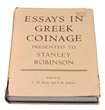
Essays in Greek Coinage Presented to Stanley Robinson. C. M. Kraay and G. K. Jenkins (eds.) (Oxford, Clarendon Press, 1968). Hardcover with jacket, 263 pages, 33 black and white plates. A substantial Festschrift bringing together seventeen specialist studies by leading scholars, offering a wide sweep of Greek numismatic research from the earliest electrum and archaic issues through classical and Hellenistic problems, with several papers of lasting value for chronology, mint organization, metrology, portraiture, and the interpretation of types and legends. Topics range from electrum coins from Gordion, observations on Wappenmunzen, and the earliest Athenian ?Owls,? to early Tarentine chronology, fifth-century issues of Kos, early Greek bronze coinage, new evidence for the gold-silver ratio, Lycian coin portraits, Corinthian trihemidrachms, the electrum coinage of Syracuse, the mints of Lysimachus, and Hellenistic issues of Byzantium and Chalcedon, with further studies extending to related fields including the Roman victoriate and Cappadocian royal coinages, all supported by well chosen plates for close comparative work. Paper cover with tiny tears, original book cover is in great condition, overall VG from many years of use. From the personal reference library of David Allen, a well known numismatist, formed over more than 50 years and used as a long term reference for research, attribution, and catalogue work.
| SOLD at A$100 | ||
| 13934 |
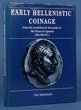
Early Hellenistic Coinage from the Accession of Alexander to the Peace of Apamea (336-186 B.C.). Otto Morkholm (Cambridge, 1991). Hardcover with dust jacket, 273 pages with 45 black and white plates. A landmark study, and still the first full and coherent survey of early Hellenistic coinage, covering the issues of Alexander the Great, his successors, and the major cities of Greece and Asia Minor across roughly a century and a half. Combining clear scholarship with practical usefulness, it offers detailed descriptions and strong plate coverage illustrating well over 600 coins, making it an important reference for attribution as well as for the historical understanding of the period. The work is well structured, beginning with the general features of Hellenistic coinage, including metals and standards, production and use, types and inscriptions, before moving through Alexander and the Diadochi to the later balance of power down to 188 B.C., and concluding with appendices, ruler lists, chronological tables, glossary, bibliography, and an epilogue by Philip Grierson extending the narrative beyond 188. Covers with light wear and shelf dust, spine fading, showing age and use; overall the book is in VG condition. From the personal reference library of David Allen, a well known numismatist, formed over more than 50 years and used as a long term reference for research, attribution, and catalogue work.
| SOLD at A$100 | ||
| 13935 |
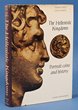
The Hellenistic Kingdoms: Portrait Coins and History. Norman Davis and Colin M. Kraay (London, Thames & Hudson, 1973; reprint 1980). Quarto, 296 pages, with a strong section of glossy plates. A well made and highly useful survey linking the political history of the Hellenistic world to the portrait coinages of the successor kingdoms, and particularly valuable for placing the major royal series into their historical setting while also providing a convenient visual guide for the comparison of portraits, rulers, and principal issues across the period. Covers with light wear and shelf dust, spine fading, showing age and use; with a name to the front free endpaper, overall the book is in VG condition. From the personal reference library of David Allen, a well known numismatist, formed over more than 50 years and used as a long term reference for research, attribution, and catalogue work.
| AVAILABLE at A$40 | ||
| 13936 |
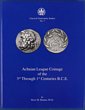
Achaian League Coinage of the 3rd Through 1st Centuries B.C.E. Steve M. Benner, Ph.D. Classical Numismatic Group, 2008, first edition. Hardback with dust jacket, 188 pages. ISBN 9780980238709. Classical Numismatic Studies No. 7. A focused, highly usable study that brings together the history and full coinage of the Achaian League, with a clear political narrative from the League?s reconstitution through the major wars of the Hellenistic period to its end, followed by a detailed analysis of the silver hemidrachms and key bronze issues, including typology, metrology, monograms, personal names, and the main points of attribution debate. The city-by-city catalogues cover a broad range of mints, with appendices of indexes and concordances, and illustrations throughout that make identification straightforward at the desk. As new.
| AVAILABLE at A$75 | ||
| 13937 |
Sylloge Nummorum Graecorum (SNG), Edoardo Levante (in collaboration with Peter Weiss), three-volume reference set comprising SNG Levante, Cilicia (Switzerland I, Cr?dit Suisse, Bern, 1986), a tall quarto sylloge with a concise text section and extensive photographic plates (commonly cited for Cilician types, with 36 pages of text and 125 plate leaves, plus map), SNG France 2, Cilicie (Cabinet des M?dailles, Biblioth?que nationale de France, Paris and Z?rich, 1993), cataloguing 2,436 coins with an extensive plate run (often described as 137 plates with facing descriptive text), and SNG France 3, Pamphylie, Pisidie, Lycaonie, Galatie (Cabinet des M?dailles, Biblioth?que nationale de France, Paris and Z?rich, 1994), illustrating and describing 2,675 coins across the southern Anatolian regions on a substantial plate sequence (widely noted as 146 plates), all in the classic SNG format prized by collectors and researchers for quick, confident comparison by photograph, with clear attributions and consistent numbering that is regularly cited in auction catalogues and collection records. Paper covers show visible signs of handling and use, otherwise the books present very fresh overall, with clean interiors and a near-new feel. From the personal reference library of David Allen, a well known numismatist, formed over more than 50 years and used as a long term reference for research, attribution, and catalogue work.
| SOLD at A$500 | ||
| 13938 |
Sylloge Nummorum Graecorum, The Collection of the American Numismatic Society, Part 6: Palestine?South Arabia. (New York, The American Numismatic Society, 1981). Large format (39 cm), x pages and 54 plates with facing text, full cloth with gilt titles to the front cover, a strong SNG volume presenting the ANS holdings for Palestine through South Arabia in the classic plate-and-tex t format, very useful for attribution and comparison. Covers with light wear and shelf dust, spine fading, cover is good for the age and years of use, overall VF from many years of use, in perfect condition.
| AVAILABLE at A$75 | ||
| 13939 |
Sylloge Nummorum Graecorum, Israel I: The Arnold Spaer Collection of Seleucid Coins. (Jerusalem, dated 1993 on the binding; copyright 1998 by Arnold Spaer and Arthur Houghton; published by Italo Vecchi Ltd, London; printed in England by Optichrome The Printing Group). A substantial SNG volume devoted to Seleucid coinage from the Spaer Collection, presented in the classic plate and text format and accompanied by an extended introductory essay placing the collection in context and explaining its formation and scholarly importance, making it a very useful reference for attribution, comparison, and research within this complex Hellenistic series. Covers with light wear and shelf dust, spine fading, showing age and use; overall the book is in VG condition. From the personal reference library of David Allen, a well known numismatist, formed over more than 50 years and used as a long term reference for research, attribution, and catalogue work.
| AVAILABLE at A$40 | ||
| 13940 |
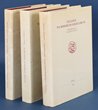
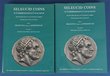
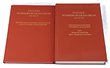
Seleucid Coins: A Comprehensive Catalogue, Part I: Seleucus I Through Antiochus III, Arthur Houghton and Catharine C. Lorber (with metrological tables by Brian Kritt), two-volume set published by the American Numismatic Society in association with Classical Numismatic Group (New York and Lancaster, 2002), commonly cited in scholarship as SC I, and regarded as the standard modern corpus for the early Seleucid series, described as the first comprehensive treatment of this phase of Seleucid coinage since Edward T. Newell?s 1938 mint studies. Volume I provides the introduction, maps, and main catalogue (xxxix, 488 pp.), while Volume II supplies the supporting appendices, detailed indices, and a substantial plate section (300 pp., 101 photographic plates), making it especially practical for attribution work, die-study reference, and consistent citation across collections and auctions. Exceptionally fresh for long-term collector ownership, with only light shelf handling, tight bindings, and very clean interiors. From the personal reference library of David Allen, a well known numismatist, formed over more than 50 years and used as a long term reference for research, attribution, and catalogue work.
| SOLD at A$150 | ||
| 13941 |
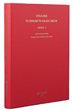
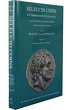
Seleucid Coins: A Comprehensive Catalogue, Part I: Seleucus I through Antiochus III, Volume II: Appendices, Indices and Plates. Arthur Houghton and Catharine Lorber, metrological tables by Brian Kritt. New York, American Numismatic Society in association with Classical Numismatic Group, 2002. Large 4to, teal cloth with gilt spine lettering, in the pictorial dust jacket, maroon endpapers. ISBN 0-9709268-4-7. The essential companion volume to Part I, bringing together the full working apparatus, substantial appendices (including hoards, mint administration and metrology), detailed indices for quick navigation by mint, control marks, monograms, legends and types, and an extensive sequence of plates illustrating both precious-metal and bronze issues across the Seleucid world, invaluable for attribution and close comparison. Virtually unread, with a fresh, glossy jacket showing only the lightest handling, clean boards, and crisp pages throughout.
| AVAILABLE at A$100 | ||
| 13942 |
Houghton, Arthur, and Catharine Lorber, with metrological tables by Brian Kritt. Seleucid Coins: A Comprehensive Catalogue, Part I, Seleucus I through Antiochus III, Volume I, Introduction, Maps, and Catalogue. New York: The American Numismatic Society, Lancaster and London: Classical Numismatic Group, 2002. Large 4to, teal cloth in pictorial dust jacket, 486 pp. The standard modern work for the early Seleucid series, setting out the method and mint structure, then cataloguing the coinage by reign and by mint, with short historical and iconographic notes followed by detailed listings of denominations, control systems and magistrate marks, metrology, and references to the key literature. With maps, a chronological table and a Seleucid succession stemma. Volume II with appendices and plates is not present. Choice copy, crisp and clean with a tight binding and unmarked interiors.
| AVAILABLE at A$150 | ||
| 13943 |
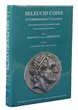
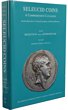
Seleucid Coins: A Comprehensive Catalogue, Part II: Seleucus IV through Antiochus XIII. Arthur Houghton, Catharine Lorber and Oliver Hoover. New York, American Numismatic Society; Lancaster and London, Classical Numismatic Group, 2008. Volume II, Part II, complete in two volumes. Large 4to, teal cloth in matching pictorial dust jackets. Vol. I (Text), 682 pages; Vol. II (Appendices, Indices and Plates), c. 530+ pages with 120 full-page plates. The standard corpus for later Seleucid coinage, arranged by reign and mint with historical introductions, mint practice and iconography, and full typology and metrology throughout. The second volume adds the main working tools, including appendices on denominations, countermarks, overstrikes, plated coins, imitations, test pieces and dating, hoard material, thorough indices, and a superb run of plates illustrating representative examples across the mints in both precious metal and bronze for confident attribution. Exceptionally fresh set, with bright jackets, clean boards, sharp corners, and crisp pages throughout.
| AVAILABLE at A$100 | ||
| 13944 |
Seleucid Coins: A Comprehensive Catalogue, Part II: Seleucus IV through Antiochus XIII, Volume I (Introduction, Maps, and Catalogue), by Arthur Houghton, Catharine Lorber, and Oliver Hoover (New York, American Numismatic Society; Lancaster/London, Classical Numismatic Group, 2008), large 4to in teal cloth with matching pictorial dust jacket, approx. 705 pp, ISBN 978-0-9802387-0-9 (Vol. I). This is the go-to modern reference for the later Seleucid series, laid out reign-by-reign and mint-by-mint, and designed as the natural successor to Newell?s foundational work, with a clear user guide, abbreviations, a helpful historical and numismatic chronology (187 to 64 BC), and major corrections to Seleucid Coins Part I. The main catalogue covers the rulers from Seleucus IV Philopator through Antiochus XIII Asiaticus, giving concise historical introductions and detailed coinage listings with denominations, metrology, control systems, and cross-references, supported by a strong suite of keyed maps showing the Seleucid realm and mint networks; it closes with addenda and corrigenda to Part I plus an addenda section on satrapal coinage of Seleucus I in Babylonia. (Plates, indices, and bibliography are in the companion Volume II; this listing is for Volume I only.) Condition about new, bright clean jacket and cloth, sharp corners, tight square binding, and unmarked interiors.
| AVAILABLE at A$150 | ||
| 13945 |
Monnaies Greco-Bactriennes et Indo-Grecques: Catalogue Raisonn?. Osmund Bopearachchi. Paris, Biblioth?que Nationale, 1991, first edition. Paperback, 459 pp. ISBN 2-7177-1825-7. Preface by Georges Le Rider. The foundational corpus for Greco-Bactrian and Indo-Greek coinage, establishing the standard Bopearachchi numbering and chronological framework, presented ruler-by-ruler from Diodotos and Euthydemos through Menander and later issues, with systematic coverage of gold, silver, and bronze types, legends (including bilingual series), monograms and controls, mints and circulation, overstrikes, hoard references, metrology, and extensive concordances to the classic literature. Illustrated with 69 photographic plates, and supported by bibliography, indexes, and detailed commentary. Very good condition, light wear and soiling to covers with minor abrasions and sticker ghosting, contents clean, complete, and firmly bound.
| SOLD at A$325 | ||
| 13946 |
Coinage of Hermaios & Imitations by Scythians by R. C. Senior, Classical Numismatic Studies No. 3, published by CNG in 2000, is a major specialised reference on the late Indo-Greek king Hermaios and the extensive contemporary imitative coinage struck in his name, offering a definitive corpus of this historically important and complex series. Hardbound with dust jacket and extending to 102 pages with 23 finely executed line-drawn plates, together with charts of monograms, maps, tables, and appendices, the work brings together numismatic, iconographic, hoard, and geographical evidence in a clear and scholarly manner, making it especially valuable for the study of chronology, mint attribution, and the relationship between official and imitative issues. A highly important reference for collectors and researchers of Baktrian, Indo-Greek, and Central Asian coinage, and an essential CNG publication for the specialist library. Very fine, as new.
| SOLD at A$40 | ||
| 13947 |
The Caprara Forgeries. Philip Kinns (London, Royal Numismatic Society, 1984). RNS Special Publication No. 16, 59 pages with 8 plates, red cloth with dust jacket. A focused and important study of the early nineteenth century Caprara forgeries of Greek coins, documenting a deceptive counterfeit series that passed as genuine for many years and remains highly relevant for collectors, dealers, and cataloguers seeking to recognise these pieces quickly and accurately. Though compact in size, it is a valuable specialist reference, combining clear documentation with useful plate material for comparison and identification. Covers with light wear and shelf dust, spine fading, showing age and use; overall the book is in VG condition. From the personal reference library of David Allen, a well known numismatist, formed over more than 50 years and used as a long term reference for research, attribution, and catalogue work.
| AVAILABLE at A$40 | ||
| 13948 |
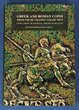
Greek and Roman Coins from the du Chastel Collection: Coin Cabinet of the Royal Library of Belgium. (London, Spink, 1999). Quarto, xix, 162 pages with 41 plates, hardbound with dust jacket. A finely produced institutional catalogue publishing the celebrated collection formed by Count du Chastel and later acquired by the Belgian Government, comprising 821 coins, with more than 300 Greek and over 500 Roman pieces. Broad enough to cover the principal periods and series while maintaining a focus on quality and select representative types, it is valuable both as a record of a notable cabinet and as a practical comparison source for attribution, research, and catalogue work. The plates are a particular strength, giving the volume lasting usefulness well beyond its role as a collection catalogue. Covers with light wear and shelf dust, spine fading, showing age and use; overall the book is in VG condition. From the personal reference library of David Allen, a well known numismatist, formed over more than 50 years and used as a long term reference for research, attribution, and catalogue work.
| AVAILABLE at A$40 | ||
| 13949 |
Sylloge Nummorum Graecorum volumes. (1) Sylloge Nummorum Graecorum, Volume XI, The William Stancomb Collection of Coins of the Black Sea Region. (2) Sylloge Nummorum Graecorum, Volume XII, The Hunterian Museum, University of Glasgow, Part I, Roman Provincial Coins, Spain to Kingdoms of Asia Minor. Two substantial SNG volumes in the classic plate and text format, highly useful for fast and accurate attribution, comparison, and catalogue work, and increasingly difficult to replace in hard copy. A strong and unusually high quality pair, offering broad usefulness across Greek and Roman provincial numismatics and well suited to the working reference shelf. Covers with light wear and shelf dust, spine fading, showing age and use; overall the books are in VG condition. From the personal reference library of David Allen, a well known numismatist, formed over more than 50 years and used as a long term reference for research, attribution, and catalogue work. (2)
| AVAILABLE at A$100 | ||
| 13950 |
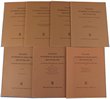
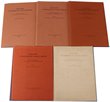
Sylloge Nummorum Graecorum, Deutschland, Staatliche Munzsammlung Munchen, complete run of Heft 1-7, comprising 1. Heft, Hispania, Gallia Narbonensis (1968); 2. Heft, Etruria, Umbria, Picenum, Latium, Samnium, Frentani, Campania, Apulia (1970); 3. Heft, Kalabrien, Lukanien (1973); 4. Heft, Bruttium; Karthager in Italien (1974); 5. Heft, Sikelia (1977); 6. Heft, Sikelia, Punier in Sizilien, Lipara, Sardinia, Punier in Sardinien, Nachtrage (1980); and 7. Heft, Taurische Chersones, Sarmatien, Dacia, Moesia Superior, Moesia Inferior (1985). An important and increasingly elusive specialist series, forming a substantial scholarly reference for the Greek coinages of Spain, southern Gaul, Italy, Sicily, Sardinia, Carthaginian issues in the west, and the northern Black Sea and Danubian regions, and rarely found as a complete consecutive group. Paper covers with light wear and shelf dust, covers good for the age and years of use, with minor spine fading and gentle handling, overall VG from many years of use. From the personal reference library of David Allen, a well known numismatist, formed over more than 50 years and used as a long term reference for research, attribution, and catalogue work. (7 books)
| SOLD at A$200 | ||
| 13951 |
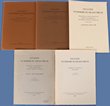
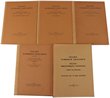
Sylloge Nummorum Graecorum studies comprising Sweden I, The Collection of His Late Majesty King Gustaf VI Adolf and the Fred Forbat Collection (Stockholm, 1974); Sweden II, The Collection of the Royal Coin Cabinet, National Museum of Monetary History, Stockholm, Part I, Gallia - Sicily (1976); Sylloge Nummorum Graecorum, Aarhus University, Denmark, edited by H. E. Mathiesen (Copenhagen, 1986); Sylloge Nummorum Graecorum, The Royal Collection of Coins and Medals, Danish National Museum, Supplement, Acquisitions 1942-1996; and Sylloge Nummorum Graecorum, The Royal Collection of Coins and Medals, Danish National Museum, Egypt: The Ptolemies, edited by Anne Kromann and Otto Morkholm (Copenhagen, 1977). A useful and increasingly elusive specialist group from the standard SNG corpus, bringing together important cabinet material from Sweden and Denmark, including Greek issues from western Europe and Sicily, Ptolemaic Egypt, and later museum acquisitions, all of clear value for research and attribution. Paper covers with light wear and shelf dust, some handling, minor corner and edge wear, good for the age and years of use, overall VG from many years of use. From the personal reference library of David Allen, a well known numismatist, formed over more than 50 years and used as a long term reference for research, attribution, and catalogue work. (5 books)
| SOLD at A$150 | ||
| 13952 |
Sylloge Nummorum Graecorum, The Collection of the American Numismatic Society, comprising Part I, Etruria - Calabria (1969); Part 3, Bruttium - Sicily I: Abacaenum-Eryx (1975); Part 4, Sicily II: Galaria-Styella (1977); Part 6, Palestine-South Arabia (1981); and a duplicate of Part 6 in a variant binding. An important specialist group from the ANS SNG series, covering central and southern Italy, Sicily, Palestine, and South Arabia, and representing standard scholarly reference material for Greek and related ancient coinages. Such ANS SNG volumes are widely respected working references and are much more often encountered individually than assembled in small study groups such as this. Mixed cloth and paper covers with light wear and shelf dust, some handling and minor corner wear, good for the age and years of use, overall VG from many years of use. From the personal reference library of David Allen, a well known numismatist, formed over more than 50 years and used as a long term reference for research, attribution, and catalogue work. ( 5 volumes)
| SOLD at A$100 | ||
| 13953 |
Sylloge Nummorum Graecorum studies comprising Volume IV, Fitzwilliam Museum, Leake and General Collections, Part I, Spain (Emporiae, Rhoda) - Italy (1972); Part II, Sicily - Thrace (1972); Part VIII, Syria - Nabathaea (1971); Volume VI, The Lewis Collection in Corpus Christi College, Cambridge, Part I, The Greek and Hellenistic Coins (with Britain and Parthia) (1972); and Sylloge Nummorum Graecorum, France, Bibliotheque Nationale, Cabinet des Medailles, Collection Jean et Marie Delepierre (1983). An important and attractive specialist group from the standard SNG corpus, bringing together major reference material for Greek, Hellenistic, provincial, and eastern issues across the western Mediterranean, Thrace, Syria, Nabataea, and notable old cabinet collections. Such volumes are increasingly difficult to assemble in thoughtful groups, and are far more often encountered singly than in a small working run such as this. Paper and cloth covers with light wear and shelf dust, minor handling and gentle corner wear, good for the age and years of use, overall VG from many years of use. From the personal reference library of David Allen, a well known numismatist, formed over more than 50 years and used as a long term reference for research, attribution, and catalogue work.
| AVAILABLE at A$150 | ||
| 13954 |
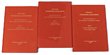
Sylloge Nummorum Graecorum volumes, American Numismatic Society, in order. (1) Sylloge Nummorum Graecorum, The Collection of the American Numismatic Society, Part 7, Macedonia I: Cities, Thraco-Macedonian Tribes, Paeonian Kings (New York, 1987). (2) Part 8, Macedonia II: Alexander I to Philip II (New York, 1994). (3) Part 9, Graeco-Bactrian and Indo-Greek Coins (New York, 1996). Three substantial ANS SNG volumes in the classic plate and text format, built for fast and accurate attribution, comparison, and catalogue work, and increasingly difficult to replace in hard copy. A notably high quality group, with broad usefulness across Greek and related eastern series, and very well suited to the working reference shelf. Covers with light wear and shelf dust, spine fading, showing age and use; overall the books are in VG condition. From the personal reference library of David Allen, a well known numismatist, formed over more than 50 years and used as a long term reference for research, attribution, and catalogue work. (3 volumes)
| SOLD at A$180 | ||
| 13955 |
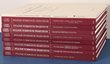
Sylloge Nummorum Graecorum, Danish National Museum series, plus Copenhagen acquisitions. (1) Sylloge Nummorum Graecorum, Volume One, Italy, Sicily. (2) Volume Two, Thrace and Macedonia. (3) Volume Three, Greece, Thessaly to Aegean Islands. (4) Volume Four, Bosporos to Lesbos. (5) Volume Five, Ionia, Caria and Lydia. (6) Volume Six, Phrygia to Cilicia. (7) Volume Seven, Cyprus to India. (8) Volume Eight, Etruria, Campania, Samnium, Latium. (9) Sylloge Nummorum Graecorum, Copenhagen, Acquisitions 1942?1996 (Nationalmuseet). A strong institutional SNG run in the classic plate-and-text format, giving wide geographic coverage and practical plate-supported comparison for attribution, and increasingly difficult to replace in hard copy, with complete online access not always straightforward. Covers with light wear and shelf dust, spine fading, covers are good for the age and years of use, overall VF from many years of use, an unusually high-quality set for this run and seldom seen in such about-new condition across all volumes. (9 volumes)
| AVAILABLE at A$1200 | ||
| 13956 |
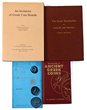
Greek and Roman coinage references. (1) Coins of the Macedonians. Martin Price (British Museum, 1974). Hardcover, a useful British Museum overview for Macedonian royal coinage, written for practical identification and historical context. (2) An Outline of Ancient Greek Coins. Zander H. Klawans (Whitman, 1959, first edition). Hardcover, 208 pages, a popular, straight forward introduction for collectors that remains handy for basics, types, and getting oriented quickly. (3) An Inventory of Greek Coin Hoards (IGCH). Margaret Thompson, Otto M?rkholm, and Colin M. Kraay (American Numismatic Society, 1973). Paperback, 408 pages with three fold-out maps, the standard inventory listing 2,387 hoards with findspot, burial date, contents, disposition, and references, with concordance and strong indexes. (4) The Syrian Tetradrachms of Caracalla and Macrinus. Alfred R. Bellinger (Sanford J. Durst reprint, 1981, of the 1940 ANS original). Hardcover, 166 pages with 26 plates, a specialised corpus for these Syrian tetradrachm issues with extensive plate material for attribution. Covers with light wear and shelf dust, spine fading, covers are good for the age and years of use, overall VG from many years of use. From the personal reference library of David Allen, a well known numismatist, formed over more than 50 years and used as a long term reference for research, attribution, and catalogue work. (4 books)
| SOLD at A$75 | ||
| 13957 |
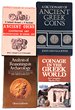
Greek numismatics and archaeology. A useful and well balanced group of references bringing together art historical, archaeological, methodological, and general numismatic studies within the Greek field. Included are: (1) Ancient Coins Illustrating Lost Masterpieces of Greek Art: A Numismatic Commentary on Pausanias (Argonaut Library of Antiquities), Friedrich Imhoof-Blumer and Percy Gardner, edited by Al. N. Oikonomides (1964), hardcover, a classic study using coin types to illuminate lost works of Greek art described by Pausanias; (2) A Dictionary of Ancient Greek Coins, John Melville-Jones (ed.) (1986), hardcover, a practical alphabetical reference for terms, mints, types, and common numismatic language; (3) Analysis of Reasonings in Archaeology: The Case of Graeco-Bactrian and Indo-Greek Numismatics, paperback, a methodological study linking archaeological reasoning with numismatic evidence in the Graeco-Bactrian and Indo-Greek fields; and (4) Coinage in the Greek World, Ian Carradice and Martin J. Price (1988), paperback, an accessible introduction to Greek coinage, circulation, and use from the seventh century B.C. into the late Hellenistic period, illustrated with photographs of more than 300 coins. A strong mixed lot for the collector, student, or researcher, with each volume useful in its own right and together forming a practical working group. Covers with light wear and shelf dust, spine fading, showing age and use; overall the books are in VG condition. From the personal reference library of David Allen, a well known numismatist, formed over more than 50 years and used as a long term reference for research, attribution, and catalogue work. (4 books)
| SOLD at A$100 | ||
| First | Previous | Next | Last | Index |