 |
 |
 |
| * Unsold lots available for sale at indicated reserve plus 22% buyer's commission plus postage & insurance.Loading... | First | Previous | Next | Last | Index |
| ANCIENT COINS: ROMAN (3) | ||||
| Lot | Description | Status | ||
| 10289 |
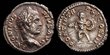
Caracalla. A.D. 198-217. Silver Denarius (3.20g). Rome mint. Struck A.D. 208. Laureate head right / Mars standing slightly left, head right, holding spear and shield. RIC IV 100; RSC 446-7. Attractive toning. gVF. (P)
| SOLD at A$110 | ||
|---|---|---|---|---|
| 10290 |
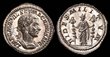
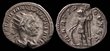
Macrinus. A.D. 217-218. Silver Denarius (3.32g). Rome mint. Struck A.D. 217. IMP C M OPEL SEV MACRINVS AVG, laureate and cuirassed bust right, seen from the front / FIDES MILITVM, Fides standing facing, holding a military standard in each hand. RIC 67; RSC 23. Choice Mint State. Perfectly centred and struck with needle-sharp detail. A superb example with lovely bluish and rose iridescent toning, almost certainly among the very finest known specimens of the type and a serious contender for the finest Macrinus denarius extant. Macrinus, a native of Mauretania and the first Roman emperor to rise from the equestrian order, began his career as a distinguished jurist and high official under Septimius Severus before advancing to the powerful post of praetorian prefect under Caracalla. A prophecy that he would overthrow and succeed the emperor, coupled with signs that Caracalla distrusted him, almost certainly drew him into the plot that ended with Caracalla's murder in April A.D. 217. Proclaimed emperor soon afterwards, Macrinus elevated his young son Diadumenian to the rank of Caesar, but his brief reign was compromised by military miscalculations and a costly peace with the Parthian king Artabanos IV, which badly damaged his standing with the legions. Seizing the moment, Julia Maesa and her family rallied Legio III Gallica to proclaim Elagabalus, whose forces defeated Macrinus near Antioch. Attempting to flee towards Italy in disguise, he was captured and executed, his short and troubled rule bringing a swift end to the first equestrian principate. From a collection formed over half a century; previously privately purchased from Superior Galleries. (P)
| SOLD at A$4100 | ||
| 10291 |
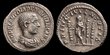
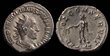
Diadumenian. As Caesar, A.D. 217-218. Silver Denarius (3.03g). Rome mint. Struck summer A.D. 217 to early A.D. 218. M OPEL ANT DIADVMENIAN CAES, bareheaded, draped and cuirassed bust right / PRINC IVVENTVTIS, Diadumenian standing facing in military attire, head right, holding signum in right hand and long sceptre in left; to right, two signa. RIC IV 102; Cohen 3 var. (bust draped only); BMC cf. 87 (same); Clay Issue 2. Slight roughness. aEF. An exceptionally eye-appealing example, well centred and sharply struck, with fine detail on both obverse and reverse. Scarce in this condition. For the type and similar quality see; NAC Auction A-125, lot 750, hammered USD 3,800. (P)
| SOLD at A$675 | ||
| 10292 |
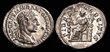
Elagabalus. A.D. 218-222. Silver Denarius (2.54g). Rome mint. Struck A.D. 219. Laureate and draped bust right / Fides seated left, holding eagle and signum; signum to left. RIC IV 71; Thirion 29; RSC 32a. Attractively toned. aEF. Boldly struck from fresh dies. Choice example. (P)
| SOLD at A$130 | ||
| 10293 |
Balbinus. A.D. 238. Bronze Sestertius (16.81g). Rome mint. 1st emission. Laureate, draped and cuirassed bust right / Concordia seated left on throne, holding patera and double cornucopia. RIC IV 22; BMCRE 18-20; Banti 1. A sublime sestertius, with a beautifully modelled portrait in high relief, greatly enhanced by an amazing and completely natural apple-green patina. Superb. gVF. (P)
| SOLD at A$1000 | ||
| 10294 |
Gordian I. A.D. 238. Bronze Sestertius (24.43g). Rome mint. IMP CAES M ANT GORDIANVS AFR AVG, laureate, draped and cuirassed bust right / SECVRITAS AVGG, S C in exergue, Securitas, draped, seated left on throne, left foot on footstool, holding transverse sceptre in right hand, left hand at side, fold of drapery over left arm. RIC IV 11; BMCRE 12-13; Banti 7. A very attractive brown-green patina. aEF. Exceptional piece. Very rare. For the type see; Triton XIV, lot 780, hammered USD 12,000, and compare NAC 54, lot 527, of similar quality, hammered CHF 16,000. From the David Allan Collection; acquired from Noble Numismatics Auction 48 (11 July 1995), lot 3131. (P)
| SOLD at A$2700 | ||
| 10295 |
Gordian II. A.D. 238. Silver Denarius (2.87g). Rome mint. IMP M ANT GORDIANVS AFR AVG, laureate, draped and cuirassed bust right / VIRTV S AVGG, Virtus, helmeted and wearing military dress, standing left, holding shield set on ground in right hand and spear in left hand. RIC IV 3; Pink III, p. 23; RSC 14; BMCRE 30. aEF. An exceptional example, needle-sharp, with an amazing portrait of the emperor. Lustre present. Very rare and one of the finest specimens known. For the type and similar quality see; Triton XIV, lot 781, hammered USD 9,500, and Nomos Auction 35, lot 728 (15 June 2025), hammered CHF 5,000. From the Titan Collection; previously from the Collection of David Allen, acquired from Classical Numismatic Group, Inc. (CNG), Auction 42 (29-30 May 1997), lot 1022, with a wonderful old pedigree.
| SOLD at A$4600 | ||
| 10296 |
Gordian III. A.D. 238-244. Gold Aureus (4.79g). Rome mint. Struck A.D. 238-239. IMP CAES M ANT GORDIANVS AVG, laureate, draped and cuirassed bust right / FIDES MILITVM, Fides standing left, holding standard and sceptre. RIC 7; Calico 3196. Sharp and highly lustrous. Our grade: Nearly Mint State. Notably, the coin had already been certified by NGC approximately five years before its appearance in Herakles Auction 2, a significant detail not recorded in that sale description. NGC graded Ch AU*. Very rare. Acquired by the consignor, whose collection we are pleased to present, and regarded as one of the final major coins purchased during more than 50 years of collecting. Acquired from Herakles Auction 2, Germany, lot 108, hammered A$12,300.
| SOLD at A$14000 | ||
| 10297 |
Gordian III. A.D. 238-244. Bronze Sestertius (19.02g). Rome mint, 2nd officina. 9th-11th emissions, A.D. 241-early 243. Laureate, draped and cuirassed bust right / IOVI STATORI, S C across field, Jupiter standing right, holding sceptre and thunderbolt. RIC IV 298a; Banti 37. A superbly preserved piece, perfectly centred, finely detailed on both sides, with an amazing glossy deep green patina. EF. (P)
| SOLD at A$550 | ||
| 10298 |
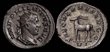
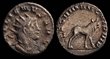
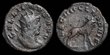
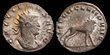
Philip I the Arab. A.D. 244-249. Silver Antoninianus (4.84g). Rome mint. Saecular Games issue for the 1000th Anniversary of Rome.Radiate, draped and cuirassed bust right, IMP PHILIPPVS AVG / SAECVLARES AVGG / III; gazelle walking left. RIC IV 17. gVF. Very attractive deep cabinet toning. Issued in A.D. 248 to commemorate the Saecular Games celebrating the millennium of Rome's foundation, this type formed part of an extensive commemorative series depicting animals used in the public spectacles. The gazelle symbolised the exotic nature of the games and reflected the grandeur of the celebrations marking Rome's 1000th anniversary. (P)
| SOLD at A$190 | ||
| 10299 |
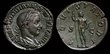
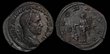
Philip I. A.D. 244-249. Bronze Sestertius (20.58g). Rome mint, 1st officina. 1st emission, A.D. 244. Laureate, draped and cuirassed bust right / Fides standing left, holding signum in each hand. RIC IV 172a; Banti 15. Wonderful dark brown-black patina. aEF. A very choice example (P)
| SOLD at A$350 | ||
| 10300 |
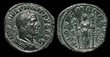
Philip I. A.D. 244-249. Bronze Sestertius (20.76g). Rome mint, 5th officina. 5th emission, A.D. 246. Laureate, draped and cuirassed bust right / Annona standing left, holding grain ears over modius and cornucopia. RIC IV 168a; Banti 9. Brown surfaces. aEF. Amazing portrait detail. (P)
| SOLD at A$200 | ||
| 10301 |
Philip II. As Caesar, A.D. 244-247. Bronze Sestertius (23.44g). Rome mint, 3rd officina. 2nd emission, A.D. 245. M IVL PHILIPPVS CAES, bareheaded and draped bust right / PRINCIPI IVVENT, S C across field, Philip II, in military dress, standing right, holding transverse spear in right hand and globe in left. RIC IV 255; Banti 10. An amazing sestertius, with an outstanding portrait, lovely deep green patina, and very well centred strike. One of the finest known, if not the finest. Numbered among the ill-fated boy-emperors of the turbulent 3rd century, Philip II was scarcely seven years old when his father raised him to the rank of Caesar in early 244. His brief formative years unfolded against a backdrop of instability, for Philip I had himself seized the throne in a coup in Asia Minor and then faced constant danger on the Danubian frontier, where he struggled to contain Rome's enemies. Philip II bore the title of Caesar for just over three years, during which a distinguished coinage was issued in his name, most notably a series of attractive silver double denarii and brass sestertii that projected an image of dynastic continuity amid mounting crisis. From the David Allan Collection, formerly in the David Tong Collection; ex Astarte S.A., Lugano, auction of 5 March 1999, lot 270.
| SOLD at A$750 | ||
| 10302 |
Philip II. As Caesar, A.D. 244-247. Orichalcum Sestertius (18.49g). Rome mint. Struck A.D. 244-246. M IVL PHILIPPVS CAES, bareheaded and draped bust of Philip II right / PRINCIPI IVVENTVTIS, S C across field, Philip II as Princeps Iuventutis, in military dress standing left, holding standard in his outstretched right hand and reversed spear in his left. Cohen 62; RIC 258. A very nice example, well centred and sharply struck, with unusually well-preserved detail and an incredible green patina. EF. Very little is recorded about Philip II, but the few facts we have are striking. In the summer of A.D. 244, when he was only about six, his father Philip I the Arab made him Caesar and Princeps Iuventutis as he took the throne. In the following year he held the consulship, and soon after he was raised to Augustus, sharing the imperial title with his father. It did not last; Philip I fell at the Battle of Verona, and the boy emperor was killed in Rome by the Praetorian Guard. The portrait on this coin still shows the softness of his youth, a reminder of just how young he was when it was struck. For the type see; Nomos Auction A1, lot 392, hammered USD 800.
| SOLD at A$300 | ||
| 10303 |
Herennia Etruscilla. Augusta, A.D. 249-251. Bronze Sestertius (16.80g). Rome mint, 6th officina. 3rd emission of Trajan Decius, A.D. 250. Draped bust right, wearing stephane / Pudicitia seated left, drawing veil and holding sceptre. RIC IV 136b (Decius); Banti 7. Light green patina. gVF. Delicate portrait. Very rare.
| SOLD at A$500 | ||
| 10304 |
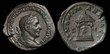
Divus Antoninus Pius. Commemorative issue struck under Trajan Decius, A.D. 250-251. Silver Antoninianus (3.88g). Rome mint. DIVO PIO, radiate head right / CONSECRATIO, lighted altar. RIC IV (Trajan Decius) 90; RSC 1189. Extremely Fine. A strong, well-preserved example of Decius' evocative Divi commemoratives. This antoninianus belongs to the remarkable series in which Decius, ruling in the turbulence of the mid 3rd century, sought to strengthen his legitimacy by honouring select earlier emperors as deified models of Roman authority, a carefully chosen roll call that even included unexpected figures such as Commodus and Severus Alexander.
| SOLD at A$220 | ||
| 10305 |
Trebonianus Gallus. A.D. 251-253. Bronze Sestertius (26.86g). IMP CAES C VIBIVS TREBONIANVS GALLVS AVG, laureate, draped and cuirassed bust of Trebonianus Gallus right, seen from behind / IVNONI MARTIALI, Juno enthroned facing, holding grain ears in right hand and globe in left, within round distyle temple decorated with festoons; S C across fields. RIC IV.III 109. EF. This is an exceptional example for the type, with a broad, almost medallic flan that allows the entire design to be fully displayed, all framed by an attractive, glossy deep forest-green patina. The piece is arguably finer than nearly all examples recorded in recent sales and across CoinArchives, with unusually sharp detail and great eye appeal. While the type itself is not especially rare, in this extraordinary state of preservation it is genuinely very rare and an especially impressive specimen. From the David Tong Collection.
| SOLD at A$1000 | ||
| 10306 |
Aemilian. A.D. 253. Silver Antoninianus (3.52g). Rome mint. IMP CAES AEMILIANVS P F AVG, radiate, draped and cuirassed bust right / MARTI PROPVGT, Mars standing left, holding shield set on ground to left and reversed spear. RIC IV 6; RSC 25. Toned, with flan crack. VF. A choice example for the issue.
| SOLD at A$210 | ||
| 10307 |
Aemilian. A.D. 253. Silver Antoninianus (4.16g). Rome mint. 1st emission. Radiate, draped and cuirassed bust right / Apollo standing left, holding olive branch and resting hand on lyre set on rock. RIC IV 1; RSC 2. aEF for this difficult issue. A nice portrait and good metal.
| SOLD at A$375 | ||
| 10308 |
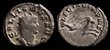
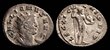
Gallienus. A.D. 253-268. Silver Antoninianus (2.88g). Legionary series issue. Mediolanum (Milan) mint. 2nd emission, A.D. 261. Radiate and cuirassed bust right / LEG I ADI VI P VI F, capricorn right. RIC V 315; MIR 36, 982n; Toffanin 74/5; RSC 447. Toned. aVF. Legio I Adiutrix (Helpers) was raised in A.D. 68, with recruitment probably begun under Nero and completed by Galba, drawing heavily on sailors and marines from the Misenum fleet. It stayed in Italy and fought for Otho on the losing side during the civil war of A.D. 68-69, then was sent to Germany around A.D. 70 and based at Mainz, sharing the fortress in a double-billet with Legio XIV Gemina. The legion saw extensive service under Domitian, Nerva and Trajan, and in A.D. 118 Hadrian transferred it to Brigetio, modern Hungary, which became its long-term base. In the turbulent 3rd century, I Adiutrix was heavily engaged on the exposed Danube frontier, facing both barbarian incursions and the forces of rival Roman usurpers. The Notitia Dignitatum records its continued presence at Brigetio into the 5th century A.D. Its symbol was Capricorn, the birth sign of Galba. Acquired from Pegasi Numismatics.
| SOLD at A$110 | ||
| 10309 |
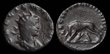
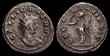
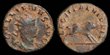
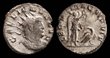
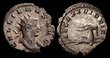
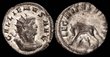
Gallienus. A.D. 253-268. Billon Antoninianus (2.05g). Mediolanum mint. Struck A.D. 260-261. GALLIENVS AVG, radiate, draped and cuirassed bust right / LEG II ITAL VII P VII F, she-wolf standing left, suckling Romulus and Remus. MIR 993g (no examples listed); RIC V.1 330 var. (reverse legend and bust type); RSC 475 var. Good Fine. Apparently an unpublished variant. Acquired from Roma Numismatics Ltd., June 2021.
| SOLD at A$190 | ||
| 10310 |
Gallienus. A.D. 253-268. Billon Antoninianus (3.52g). Mediolanum mint. Struck A.D. 260-261. GALLIENVS AVG, radiate and cuirassed bust right / LEG I MIN VI P VI F, Minerva standing facing, head left, holding Victory, spear and shield. RIC V 322; Cohen 459; MIR 988r. VF, nicely toned. Acquired from Leu Numismatik AG, Web Auction 17, lot 2826 (14-16 Aug 2021), realised CHF 320; from the E. Mensch and A. Bauer Collection of Gallienus coins.
| SOLD at A$150 | ||
| 10311 |
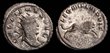
Gallienus. A.D. 253-268. Antoninianus (2.50g). Mediolanum mint. Struck A.D. 260-262. GALLIENVS AVG, radiate and cuirassed bust right / LEG I ITAL VI P VI F, boar running right on ground line. RIC V 320; RSC 455. VF. Very rare. Acquired from Roma Numismatics Ltd., E-Sale 67, lot 1035 (6 Feb 2020), realised GBP 190.
| SOLD at A$100 | ||
| 10312 |
Gallienus. A.D. 253-268. Silver Antoninianus (1.89g). Legionary series. Mediolanum (Milan) mint. 2nd emission, A.D. 260-262. Radiate and cuirassed bust right / LEG V MAC VI P VI F, Victory standing right, holding wreath and palm frond; to right, eagle standing right, head left. RIC V 345; MIR 36, 1004n; RSC 504. Toned, with some porosity. aVF. Legio V Macedonica ranks among the longest-lived of all Roman legions, its story running from the final years of the Republic into the early Byzantine period. It was probably raised around 43 BC as one of the last formations loyal to the Republic, before passing into Octavian's control after the Battle of Mutina. From the 30s BC until A.D. 6, the legion served in Macedonia, and it was from this posting that it took the cognomen Macedonica. It later saw service in Moesia, Cappadocia, Armenia and Judaea, before being established at the fortress of Potaissa in Dacia, modern Romania, in the A.D. 160s, remaining there for well over a century. Vexillations of V Macedonica fought in many campaigns on multiple fronts. When Aurelian evacuated Dacia in A.D. 271, the legion returned to Moesia, though at least one detachment was dispatched to Memphis in Egypt and stayed there down to the Islamic invasion in the later 7th century A.D. The legion's symbols were the bull and the eagle, shown on the reverse here beside Victory.
| SOLD at A$170 | ||
| 10313 |
Gallienus. A.D. 253-268. Antoninianus (3.00g). Mediolanum mint. Struck A.D. 260-261. GALLIENVS AVG, radiate, draped and cuirassed bust right / LEG VII CL VI P VI F, bull standing right. aVF. Acquired from N&N London, Auction 7, lot 521 (15 Aug 2022), realised GBP 160.
| SOLD at A$130 | ||
| 10314 |
Gallienus. A.D. 253-268. Antoninianus (2.31g). Legionary series issue. Mediolanum (Milan) mint. 2nd emission, A.D. 261. Radiate and cuirassed bust right / LEG VII CL VI P VI F, bull walking right. RIC V 348; MIR 36, 1006r; Toffanin 101/4; RSC 511. Toned. VF. Legio VII Claudia was founded by Julius Caesar at the outset of his Gallic campaign, circa 58 BC, and remained loyal to him through the hard fighting in Gaul and the civil wars that followed. Its first cognomen, Paterna, is linked to Caesar's title of Pater Patriae (father of the fatherland). Caesar later disbanded the Seventh, circa 45 BC, and settled its veterans near Capua, but after the Ides of March in 44 BC his heir Octavian quickly recalled the veterans and re-formed Legio VII to support his rise to supreme power. Its early imperial postings are not entirely clear, though it likely took part in Augustus' Thracian campaigns and helped secure the Dalmatian frontier after the Varian disaster of A.D. 9. Under Claudius, the legion refused to support a revolt by the governor of Dalmatia and was rewarded with the title Claudia Pia Fidelis (loyal and dutiful Claudian), which it kept thereafter. It eventually became permanently based at Viminacium in Moesia Superior (modern Kostolac, Serbia) and is still recorded there into the late 4th century A.D. Like many legions founded by Caesar, its symbol was his natal sign, the bull. Acquired from Harlan J. Berk Ltd., 1977.
| SOLD at A$100 | ||
| 10315 |
Gallienus. A.D. 253-268. Antoninianus (2.43g). Mediolanum mint. GALLIENVS AVG, radiate and cuirassed bust right / LEG VII CL VII P VII F, bull standing right. MIR 1007n, noting 4 specimens. aVF. Rare.
| SOLD at A$100 | ||
| 10316 |
Gallienus, A.D. 253-268. Antoninianus (2.81g). Mediolanum mint, A.D. 260-261. GALLIENVS AVG, radiate, draped and cuirassed bust left, holding spear upward and shield on shoulder / LEG V MAC VI P VI F, Victory advancing left holding wreath and palm; eagle standing facing, head left. RIC V 345; Cohen 505; MIR 1004i. VF, struck from somewhat worn dies. Acquired from Leu Numismatik AG, Web Auction 10, lot 1436 (7-8 Dec 2019), realized CHF 440; ex Peus 417 (2 Nov 2016), lot 566; previously from an old German collection, formed in the early 20th century (with collector's ticket).
| SOLD at A$425 | ||
| 10317 |
Gallienus. A.D. 253-268. Antoninianus (3.09g). Mediolanum mint, legionary series issue. GALLIENVS AVG, radiate and cuirassed bust right / LEG II XX VI P VI F, Capricorn right. MIR 1022n. gVF. Acquired from Portuscalle Numismatica, Auction 5, lot 452 (12 Sep 2022), realised EUR 190.
| SOLD at A$475 | ||
| 10318 |
Gallienus. A.D. 253-268. Antoninianus (3.09g). Mediolanum mint. GALLIENVS AVG, radiate and cuirassed bust right / LEG XIII GEM VI P VI F, Victory standing right, holding wreath and palm, facing lion standing left. MIR 1017n; RIC V 360. aVF. Acquired from Numismatik Naumann GmbH, Auction 103, lot 838 (7 Jun 2021), realised EUR 130.
| SOLD at A$190 | ||
| 10319 |
Gallienus. A.D. 253-268. Antoninianus (3.79g). Mediolanum mint, 2nd emission, A.D. 260-262. Radiate and cuirassed bust right / LEG XI C L VI P VI F, Neptune standing right, holding trident and dolphin. RIC V 359; MIR 36, 1014r; Toffanin 109/4; RSC 535. VF. Toned. Acquired from CNG, Auction 457, lot 381 (4 Dec 2019), realised US$475.
| SOLD at A$400 | ||
| 10320 |
Gallienus. A.D. 253-268. Silvered Antoninianus (2.90g). Mediolanum mint. Struck circa A.D. 260-262. GALLIENVS AVG, radiate and cuirassed bust right / LEG IIII FL VI P VI F, lion leaping right. RIC V 343; RSC 500. Rare, with a spirited rendering of the legion's lion emblem. VF. Legio IV Flavia Felix was raised by Vespasian and given the lion as its symbol; its permanent base was located at Singidunum, modern Belgrade, and it declared early for Septimius Severus, becoming one of his favoured legions. After Valerian's defeat and capture in the east, Gallienus was presumably anxious to secure the loyalty of the legions, hence this issue with relatively good silvering. Acquired from Ancient and Medieval Coins Canada (AMCC), lot 206 (10 Nov 2019), realised CAD 270; noted as a highlighted catalogue coin.
| SOLD at A$190 | ||
| 10321 |
Gallienus. A.D. 253-268. Silvered Antoninianus (3.05g). Mediolanum mint, 2nd emission, circa A.D. 260-262. GALLIENVS AVG, radiate, helmeted and cuirassed bust left, holding spear and shield / LEG III ITAL VI P VI F, stork walking right. RIC V 339; MIR 36, 999l; RSC 489. VF, with oxidation spots; otherwise much of the silvering preserved. Acquired from Tauler & Fau Subastas, Floor Auction 50, lot 256 (5 Feb 2020).
| SOLD at A$800 | ||
| 10322 |
Gallienus. A.D. 253-268. Silvered Antoninianus (3.06g). Mediolanum mint. Struck A.D. 260-261. GALLIENVS AVG, radiate, draped and cuirassed bust left, holding spear over right shoulder and shield on left arm / LEG II PART VI P VI F, centaur walking left, holding globe. RIC V 335; Cohen 482; MIR 36, 996q. aVF. Old cabinet toning. Rare, especially with this bust variety. Acquired from Roma Numismatics, E-Sale 63, lot 930 (7 Nov 2019), realised GBP 300.
| SOLD at A$180 | ||
| 10323 |
Gallienus. A.D. 253-268. Antoninianus (2.60g). Mediolanum (Milan) mint. Issue 2(2), A.D. 260-261. Radiate, draped and cuirassed bust right / COHH PRAET VI P VI F, radiate lion walking right. RIC V 370 var. (bust type); MIR 36, - [979h]; RSC 104-9 var. (bust type). aVF. Well struck for the series. Unique with this bust type.
| SOLD at A$210 | ||
| 10324 |
Gallienus. A.D. 253-268. Antoninianus (2.46g). Mediolanum (Milan) mint. 2nd emission, A.D. 260-262. GALLIENVS AVG, radiate and cuirassed bust right / LEG XXX VLP VII P VII [F], Neptune standing right, holding trident and dolphin. RIC V 369; MIR 36, 1025r; Toffanin 122/3; RSC 555; Cunetio 1487. Toned, with traces of silvering. aVF. Rare. Legio XXX Ulpia Victrix was raised by Emperor Trajan, circa A.D. 101, as part of the preparations for the Dacian Wars, and it took the emperor's family name, Ulpia. Its conduct in those campaigns later earned the extra title Victrix, meaning Victorious. Following Trajan's eastern operations of A.D. 116-117, the legion is recorded in Pannonia under the command of Quintus Marcius Turbo, a trusted associate and close friend of the future emperor Hadrian. Early in Hadrian's reign it was transferred to Vetera, modern Xanten, in Lower Germany, where it remained based for roughly the next two centuries. There, XXX Ulpia often worked alongside its sister legion, I Minervia, building and maintaining fortifications and civic works along the Rhine frontier, and the resulting inscriptions have left modern scholars an unusually rich trail to follow. Like several other legions named in the coinage of Gallienus, XXX Ulpia is also associated with support for the breakaway Gallo-Roman Empire of Postumus, circa A.D. 260-273, though it is likely that a substantial vexillation stayed loyal to the central government and served within Gallienus' reserve forces at Milan. The final notice of the legion suggests a detachment campaigning in the east against the Persians during the siege of Amida, around A.D. 360, after which the Thirtieth disappears from the historical record. Its principal symbols were Capricorn and Neptune. Acquired from CNG Electronic Auction 461, lot 447 (12 Feb 2020), realised US$250.
| SOLD at A$170 | ||
| 10325 |
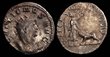
Gallienus. A.D. 253-268. Billon Antoninianus (2.23g). Mediolanum mint. Struck circa A.D. 268. Radiate and cuirassed bust right / She-wolf standing left, suckling Romulus and Remus. RIC V 329; Cohen 472. EF. Acquired from Naville Numismatics Ltd., Auction 64, lot 682 (21 Mar 2021), realised GBP 180.
| SOLD at A$220 | ||
| 10326 |
Salonina. Augusta, A.D. 254-268. Silver Antoninianus (4.75g). Antioch mint. 13th emission, circa A.D. 266-268. Draped bust right, wearing stephane and set on crescent / Aequitas standing left, holding scales and cornucopia; crescent in left field; VIIC. RIC 87; MIR 36, 1648d; RSC 4. Traces of silvering and very attractive for the type. aEF. From the Titan Collection, privately purchased from Superior Galleries; earlier acquired from Rex Numismatics.
| SOLD at A$110 | ||
| 10327 |
Saloninus. As Caesar, A.D. 258-260. Silver Antoninianus (3.81g). Samosata mint. 3rd emission, A.D. 260. Radiate, draped and cuirassed bust right / Spes standing left, raising hem of skirt and presenting flower to Saloninus standing right in uniform, holding spear; star above. RIC V 36; MIR 36, 1707u; RSC 95a. Toned, with light porosity. VF.
| SOLD at A$200 | ||
| 10328 |
Macrianus. Usurper, A.D. 260-261. Antoninianus (3.37g). Samosata mint. 1st emission. Radiate and cuirassed bust right / AP OLINI CONZ (retrograde) ERVA (sic), Apollo standing left, holding branch and lyre set on ground. RIC V 6; MIR 44, 1728; RSC 2. Toned. aVF. Rare reverse legend, and of particular note, this exact reverse die is not listed by Goebl, suggesting a previously unrecorded die variant for the type. Macrianus was a brief eastern usurper of A.D. 260-261, raised by the army in the chaos after Valerian's capture by the Persians. His claim ended quickly when the forces of Gallienus moved east, leaving his coinage as a scarce, contemporary record of that short and turbulent bid for power.
| SOLD at A$250 | ||
| 10329 |
Quietus. Usurper, A.D. 260-261. Antoninianus (3.75g). Samosata mint. 1st emission. Radiate, draped and cuirassed bust right / Aequitas standing left, holding scales and cornucopia. RIC V 2; MIR 44, 1727f; RSC 1b. Toned. aVF. Quietus was one of the short-lived crisis usurpers of A.D. 260-261, proclaimed in the eastern provinces after Valerian's capture by the Persians. His rule collapsed almost immediately when Odaenathus of Palmyra moved against him, making his coinage a brief, tangible witness to one of Rome's most unstable years.
| SOLD at A$210 | ||
| 10330 |
Postumus. Romano-Gallic Emperor, A.D. 260-269. Antoninianus (3.52g). Treveri (Trier) mint. 3rd emission, 1st phase, A.D. 263-265. Radiate, draped, and cuirassed bust right / Moneta standing left, holding scales and cornucopia. RIC V.4 269; CGE 321; AGK 45; RSC 199a. An amazing old cabinet grey toning. aEF. Good silvering for the issue. A choice example.
| SOLD at A$100 | ||
| 10331 |
Laelianus. Romano-Gallic Usurper, A.D. 269. Antoninianus (3.77g). Colonia Agrippinensis (Cologne) mint. 1st emission, circa early A.D. 269. IMP C LAELIANVS P F AVG, radiate and cuirassed bust right, slight drapery on left shoulder / VICTORIA AVG, Victory, draped, running right, holding wreath in extended right hand and palm frond cradled in left arm over left shoulder. RIC V.4 472; Gilljam dies XXXV/19; AGK 1c. Very attractive dark brown patina. Well centred, with sharp, crisp details, an exceptional specimen with outstanding eye appeal. gEF. Without doubt among the finest known and noticeably finer than most recently sold examples. It compares with Triton XXIX, lot 824 (13 Jan 2026), hammered USD 2,750, and Triton XXIX, lot 838 (13 Jan 2026), hammered USD 3,000; in our view, it even appears finer than the best recorded example at the time, Paul-Francis Jacquier Auction 42, lot 702 (16 Sep 2016), hammered EUR 9,500. This antoninianus of Laelianus marks a lightning revolt on the Rhine in A.D. 269. He challenged Postumus and struck coins in the Rhine region, but his rule lasted only weeks before he was killed by his own troops.
| SOLD at A$2000 | ||
| 10332 |
Victorinus. Romano-Gallic Emperor, A.D. 269-271. Antoninianus (4.15g). Colonia Agrippinensis (Cologne) mint. 2nd emission, late A.D. 269 to mid A.D. 270. Radiate, draped and cuirassed bust right / Salus standing right, feeding serpent held in arms. RIC V 67; Mairat 321-6; AGK 21c. Dark green patina, struck on a large flan and attractive for the type. EF.
| SOLD at A$150 | ||
| 10333 |
Victorinus. A.D. 270-271. Billon Antoninianus (5.22g). Treveri mint. IMP C VICTORINVS P F AVG, radiate, draped and cuirassed bust right / INVICTVS, Sol walking left, raising hand and holding whip; star in left field. RIC V.2 114 (Colonia Agrippinensis); Mairat, 2014 (unpublished PhD thesis), 595. Extremely Fine for this very rare bust depiction and undoubtedly one of the finest known examples. Victorinus was a Roman emperor who ruled during the tumultuous period of the Gallic Empire (A.D. 268-271). He was a military leader who rose to power amid the empire's fracturing, declaring himself emperor in A.D. 269. His reign, though brief, was marked by efforts to stabilise the western provinces of the empire, especially through military campaigns. Victorinus is also known for his coinage, which played a significant role in maintaining the economy of the Gallic Empire. His coins, often featuring his likeness and various deities, are valued by collectors for their historical significance and rarity. They reflect the challenging times of his reign, showcasing the emperor's attempts to project authority and maintain unity in a divided empire. From the inventory of I.S. Wright; acquired from Coincraft, London, 1981. (P)
| SOLD at A$300 | ||
| 10334 |
Severina. Augusta, A.D. 270-275. Silvered Bronze Denarius (2.88g). Rome mint, 5th officina. 11th emission, early September A.D. 275. Draped bust right, wearing stephane / Venus standing left, holding apple and sceptre. RIC V Online 1861; RIC V 6; BN 285-6. Well struck and unusually well preserved. Extremely Fine. An amazing example.
| SOLD at A$150 | ||
| 10335 |
Tacitus. A.D. 275-276. Antoninianus (3.44g). Rome mint, 2nd officina. 1st emission, November-December A.D. 275. Radiate and cuirassed bust right / Mars advancing left, holding olive branch, spear and shield; S in exergue. RIC V 145; BN 1652. aEF. Well struck, with impressive portrait.
| SOLD at A$190 | ||
| 10336 |
Tacitus. A.D. 275-276. Antoninianus (4.20g). Siscia mint, 2nd officina. 2nd emission. Radiate, draped and cuirassed bust right / Providentia standing left, holding cornucopia and wand over globe to left; S. RIC V 153 (Ticinum); BN 1741. An amazing dark green patina with very attractive detail. aEF.
| SOLD at A$150 | ||
| 10337 |
Florian. A.D. 276. Billon Antoninianus, Siscia, 5th officina, struck July-Aug A.D. 276. IMP C M AN FLORIANVS AVG, radiate and cuirassed bust right / FELICITAS SAECVLI, Felicitas standing left, holding patera over small altar and long-handled caduceus; V in right field. Cf. RIC Temp 4361. V in exergue (-/-//V). EF, incredible coin, sharply struck with crisp detail and an outstanding portrait, a truly amazing example. Extremely rare, with no matching example in CoinArchives and unlisted on Wildwinds.
| SOLD at A$350 | ||
| 10338 |
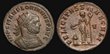
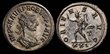
Probus. A.D. 276-282. Antoninianus (3.39g). Siscia mint. 6th emission, A.D. 281. MP C M AVR PROBVS P F AVG, radiate, draped and cuirassed bust right, seen from behind / ORIE-N-S AVG, Sol walking left, raising right hand and holding whip; T / XXI. C -. RIC - (cf. 700). An example of truly amazing quality, with magnificent even toning over both sides. Superb EF. Extremely rare, with only a handful of examples recorded in CoinArchives; this piece is undoubtedly the finest known, far superior to the example in Paul-Francis Jacquier Auction 45, lot 1604, realised USD 220, and greatly surpassing the common bust type offered in Roma Numismatics E-Sale 41, lot 980, realised USD 400.
| SOLD at A$550 | ||
| 10339 |
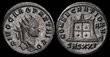
Divus Carus. Died A.D. 283. Antoninianus (3.41g). Consecration issue. Siscia mint. 6th emission of Carinus, A.D. 284. Radiate head right / CONSECRATIO AVG, lighted altar; A SMSXXI. RIC V 111 var. (mintmark of 110); Pink VI/2, p. 48. Attractive traces of original silvering with even, superb grey toning. Superb EF, well struck on both sides. This example is without doubt among the finest known for the issue and a truly exceptional coin, comparing very favourably with the specimen sold in Triton XXVIII, lot 6124 (14 January 2025), hammered USD 750; the present piece, in our view, is the more appealing of the two. (P)
| SOLD at A$575 | ||
| 10340 |
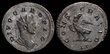
Divus Carus. Died A.D. 283. Antoninianus (3.06g). Consecration issue. Lugdunum (Lyon) mint, 2nd officina. 10th emission of Carinus and Numerian, A.D. 284. Radiate head right / Eagle standing left, head right; II. RIC V 29; Lyon 623; Pink VI/2, p. 24. A very attractive brown and deep grey patina. aEF.
| SOLD at A$160 | ||
| 10341 |
Carinus. A.D. 283-285. Antoninianus (3.87g). Rome mint, 1st officina. 3rd emission, August A.D. 283. Radiate, draped and cuirassed bust right / Genius standing left, holding cornucopia and patera; KAA. RIC 254. Very attractive glossy green patina. aEF.
| SOLD at A$140 | ||
| 10342 |
Magnia Urbica. Augusta, A.D. 283-285. Antoninianus (4.38g). Lugdunum (Lyon) mint, 4th officina. 9th emission of Carinus, A.D. 284. Draped bust right, wearing stephane, set on crescent / Venus Genetrix standing left, holding apple and sceptre; D to left. RIC V 337; Pink VI/2, p. 24; Lyon 617. Brown patina, with minor porosity and traces of silvering. A splendid, very sharply struck piece with original silvering and an excellent portrait. aEF. This antoninianus was struck for the little-known empress Magnia Urbica at Lugdunum in A.D. 284, right at the end of Carinus' troubled reign. Her portrait with stephane on a crescent shows her formally proclaimed Augusta, while Venus Genetrix on the reverse quietly promises continuity and protection for a regime that was about to disappear with the rise of Diocletian. From the Titan Collection. Acquired from Numismatic Fine Arts, dated 1/9/1988.
| SOLD at A$400 | ||
| 10343 |
Diocletian. A.D. 284-305. Antoninianus (4.22g). Antioch mint, 7th officina. Struck A.D. 293-295. Radiate, draped and cuirassed bust right / Diocletian standing right, holding sceptre and receiving Victory on globe from Jupiter standing left, holding sceptre; Z//XXI. RIC V 322. Partial silvering toned grey-brown. An example of truly amazing quality, with magnificent detail. Although the type itself is common, coins in such preservation are genuinely very hard to find.
| SOLD at A$230 | ||
| 10344 |
Julian of Pannonia. Usurper, A.D. 284-285. Antoninianus (3.82g). Siscia mint, 2nd officina. Struck December A.D. 284. IMP C M AVR IVLIANVS P F AVG, radiate, draped and cuirassed bust right / FELICITAS TEMPORVM, Felicitas standing left, holding caduceus in right hand and sceptre in left; S|B//XXI. RIC V 2; Pink VI/2, p. 49; Venera 4398. Attractively toned, with silvering. EF. A truly amazing coin, without doubt one of the finest known for the type. Sharply struck, beautifully centred and blessed with exceptional eye appeal, it is in our view clearly much finer than the recent example sold in Leu Auction 26, lot 4839 (8 July 2023), hammered USD 6,600, as well as superior to the specimen offered in Triton XXVI, lot 828 (10 January 2023), hammered USD 4,750. Taking these important benchmarks into account, the present coin would undoubtedly rank among the very finest known examples of the type. Marcus Aurelius Sabinus Iulianus first appears in history as a provincial administrator, serving as corrector in northern Italy under the emperor Carus. In the turmoil that followed Carus' death, while Carinus and the rising star Diocletian struggled for control of the empire, Julianus seized his moment. Around A.D. 284 he briefly claimed imperial authority in Pannonia and struck coins from the important mint at Siscia, attempting to give his revolt a veneer of legitimacy. His bid for power was short-lived: Carinus marched out from his western base, probably in Britain, and moved swiftly to crush the rebellion, defeating and killing Julianus near Verona early in A.D. 285. From the Titan Collection.
| SOLD at A$4800 | ||
| 10345 |
Hadrian. AD 117-138. Silver Denarius (3.10g). Rome mint. Struck circa AD 124-128. Laureate bust right, slight drapery / Annona seated left, holding hook and cornucopia; modius with grain ears at feet to left. RIC II 170; RSC 379. VF.
| SOLD at A$750 | ||
| 10346 |
Carausius. Romano-British Emperor, A.D. 286-293. Antoninianus (4.05g). C mint. Radiate, draped and cuirassed bust right / Pax standing left, holding olive branch and vertical sceptre; S|P//C. RIC V 302. Toned. gVF. A magnificent example with wonderful reverse detail.
| SOLD at A$240 | ||
| 10347 |
Carausius. Romano-British Emperor, A.D. 286-293. Bronze Antoninianus (4.56g). Londinium (London) mint. Radiate, draped and cuirassed bust right / PAX AVGGG, Pax standing left, holding olive branch in extended right hand and transverse sceptre in left; S-P//MLXXI. RIC V 143. VF. A very attractive portrait struck on a full flan, nicely toned with some golden highlights. Carausius was the naval commander who broke away in Britain in A.D. 286 and ruled as a self-styled emperor for several years. From his mints in Britain he struck an unusually confident coinage, blending Roman imperial style with pointed propaganda aimed at legitimacy, before he was assassinated and the breakaway regime began to unravel.
| SOLD at A$275 | ||
| 10348 |
Maximianus Herculius. A.D. 286-305 (first reign). Bronze Follis (9.71g). Siscia mint. IMP MAXIMIANVS P F AVG, laureate head right / SACRA MONET AVGG ET CAESS NOSTR, Moneta standing left, holding scales and cornucopia, star above, B in field, SIS in exergue. RIC VI Siscia 134b. An amazing, sharp example with nearly intact original silvering. EF.
| SOLD at A$100 | ||
| 10349 |
Domitius Domitianus. Usurper, A.D. 297-298. Bronze Follis (9.37g). Alexandria mint, 2nd officina. IMP C L DOMITIVS DOMITIANVS AVG, laureate head right / GENIO POPVLI ROMANI, Genius standing left, modius on head, naked except for chlamys over left shoulder, holding patera in right hand and cornucopia in left; to left, eagle standing left, head right; -B ALE. RIC VI 20. Very attractive light brown patina. Truly exceptional in quality for this very rare issue, an incredible coin in hand. EF. For comparable examples see; Classical Numismatic Group Auction 118 (13 September 2021), lot 1159, hammered USD 7,500, and Leu Numismatik Auction 19 (18 October 2025), lot 266, likewise hammered USD 7,500. Historical evidence for the Egyptian revolt of the mid 290s is scarce and often contradictory. Most literary sources name Aurelius Achilleus as the leader of the uprising, yet the surviving papyri and, above all, the coinage point instead to an otherwise obscure L. Domitius Domitianus as the principal usurper. The revolt appears to have begun in Thebes, then spread rapidly through Egypt, with the rebels seizing control of Lower Egypt and Alexandria. From Alexandria, Domitius Domitianus issued a rare series of imperial aurei, folles and a small number of provincial issues in his own name, asserting full imperial authority in open defiance of the Tetrarchy. The precise chronology remains debated. Many scholars place the rising around A.D. 297, with Diocletian personally leading the campaign to recover Egypt and finally suppressing the revolt in early 298, although some prefer a slightly earlier start around 295. It is possible that Domitius Domitianus died late in 297 and was briefly succeeded by Aurelius Achilleus, whose name is preserved in the literary tradition as the usurper slain by Diocletian after the fall of Alexandria. Whatever the exact sequence, the episode was short but serious, and the coinage of Domitius Domitianus stands as a rare and tangible record of this dramatic challenge to imperial authority in Egypt. From the Titan Collection; previously from the David Allan Collection, acquired from CNG Auction 40 (4 December 1996), lot 1738; ex James Fox Collection.
| SOLD at A$3000 | ||
| 10350 |
Maximianus. As Senior Augustus, A.D. 305-310. Bronze Follis (13.36g). Abdication issue. Cyzicus mint, struck A.D. 305-307. D N MAXIMIANO FELISSIMO SEN AVG, laureate bust right in imperial mantle, holding olive branch and mappa / PROVIDENTIA DEORVM QVIES AVGG, Providentia standing right, extending hand to Quies standing left, holding branch and leaning on sceptre. Marks: S F in left field, KA in right field, PTR in exergue. RIC VI Cyzicus 678. Attractive golden toning over the partial silvering, with brown and green patina. gVF. Very rare. Struck at Cyzicus, but imitating the Trier mint mark. This issue is routinely attributed to Trier (Treveri) because it carries PTR, yet portrait style and hoard evidence indicate that it was actually struck at Cyzicus. It was produced by two officinae marked with Greek letters, and the decisive feature is the K with the officina letter in the field between the figures, which serves as the true Cyzicus mint signature rather than PTR. This point is reinforced by related Cyzicus issues, RIC 22-23, struck by the same officinae without any PTR. The most plausible explanation is that early Trier examples were circulated as prototypes for other mints to copy, and at Cyzicus the engravers reproduced the model too literally, retaining PTR while also adding their own field mark and creating an apparent double mint mark. The mistake was soon recognised, and later dies were cut showing only the Cyzicus mint mark in its proper position.
| SOLD at A$575 | ||
| 10351 |
Maximianus. First reign, A.D. 286-305. Silver Argenteus (2.55g). Treveri mint. Struck A.D. 298-299. MAXIMI-ANVS AVG, laureate head right / VICTORIA SARMAT, the Tetrarchs sacrificing over a tripod before a camp gate with six turrets, club in exergue. RIC VI Treveri 114b. Needle-sharp with an amazing portrait. Lovely old cabinet toning, with lustre still present and beautifully preserved. EF. The second example found in CoinArchives. Very rare.
| SOLD at A$500 | ||
| 10352 |
Constantius I. As Caesar, A.D. 293-305. Silver Argenteus (3.04g). Siscia mint, 1st emission, autumn A.D. 294-295. CONSTANTIVS CAESAR, laureate head right / VIRTVS MILITVM, the four Tetrarchs sacrificing over tripod before city enclosure with eight turrets. RIC VI 44a; Gautier, Argent 32ag corr.; RSC 315c. aEF. A very attractive example with beautiful deep grey toning.
| SOLD at A$400 | ||
| 10353 |
Constantius I. As Caesar, A.D. 293-305. Bronze Follis (10.30g). Cyzicus mint, 1st officina. Struck circa A.D. 295-296. Laureate head right / Genius standing left, holding patera from which liquid flows, and cornucopia; KA. RIC VI 9a. Partial silvering exhibits wonderful golden toning. EF. An incredible piece in hand.
| SOLD at A$100 | ||
| 10354 |
Constantius I Chlorus. A.D. 305-306. Bronze Follis (11.28g). Carthage mint. IMP CONSTANTIVS P F AVG, laureate head right / SALVIS AVGG ET CAESS FEL KART, Carthage standing facing, head left, holding fruits in both hands; H in field; A in exergue. RIC VI Carthage 39a. gVF. Amazing green patina. Superb example and rare. A scarce Carthage issue from the brief period immediately following Constantius' elevation to Augustus, with the SALVIS reverse serving as a reassuring type for the safety and prosperity of the Augusti and Caesars.
| SOLD at A$100 | ||
| 10355 |
Severus II, as Caesar. A.D. 305-306. Bronze Follis (12.01g). Heraclea mint, 1st officina. FL VAL SEVERVS NOB CAES, laureate head right / GENIO POPV-L-I ROMANI, Genius standing left, holding patera and cornucopia; HTA. RIC VI Heraclea 26a. An amazing, sharp example with the original silvering almost intact. gVF.
| SOLD at A$150 | ||
| 10356 |
Severus II. A.D. 306-307. Bronze Follis (10.68g). Lugdunum (Lyon) mint. Struck A.D. 306-307. Laureate and cuirassed bust right / Genius standing left, holding patera and cornucopia; (altar)/(star)//PLG. RIC VI 186c; Lyon 382. Excellent portrait, with a very attractive dark green patina. Truly remarkable in condition, with wonderfully crisp detail, quite possibly the finest of its type. gEF.
| SOLD at A$950 | ||
| 10357 |
Maximinus II. As Caesar, A.D. 305-309. Bronze Follis (6.55g). Alexandria mint, 2nd officina. Struck circa late A.D. 308-310. Laureate head right / Genius standing left, holding patera in right hand and cornucopia in left; K B P ALE. RIC VI 99a. Wonderful green-brownish patina with some golden toning. EF.
| SOLD at A$100 | ||
| 10358 |
Constantine I. As Caesar, A.D. 306-309. Bronze Follis (6.64g). Treveri (Trier) mint, 1st officina. Struck A.D. 307. Laureate and cuirassed bust right / Mars standing right, holding reversed spear and shield; S|A//PTR. RIC VI 725. Dark brown to red-brown patina, with traces of silvering, deposits and minor verdigris. A well-detailed example with an attractive overall appearance. aEF.
| SOLD at A$350 | ||
| 10359 |
Constantine I. As Caesar, A.D. 306-309. Bronze Follis (9.15g). Treveri (Trier) mint. Struck circa summer A.D. 307. Laureate and cuirassed bust right / Genius standing left, holding patera and cornucopia; S|A//PTR. RIC VI 719b. Wonderfully toned, with almost complete original silvering still intact, this coin is a superb MS example of the type, boldly struck on a broad flan with crisp detail and an exceptional, vibrant portrait. The surfaces are fresh and attractive, giving it an overall eye appeal far superior to what is usually seen. For a recently sold comparison, see CNG Electronic Auction 558 (20 March 2024), lot 688, hammered USD 700, yet the present piece is clearly the more attractive and impressive specimen, standing in the very top tier of known examples. (P)
| SOLD at A$425 | ||
| 10361 |
Galeria Valeria. Augusta, A.D. 293-311. Bronze Follis (6.52g). Alexandria mint, 5th officina. Struck circa late A.D. 308. Diademed and draped bust right / Venus standing facing, head left, holding apple and raising drapery over shoulder; E/X-K//ALE. RIC VI 81. Very well struck, with sharp detail and a particularly impressive portrait. A very attractive glossy brown-green patina. gEF. An incredible coin.
| SOLD at A$400 | ||
| 10362 |
Galeria Valeria. Augusta, A.D. 308-311. Bronze Follis (7.06g). Cyzicus mint. Struck A.D. 308-309. GAL VALERIA AVG, diademed and draped bust right / VENERI VICTRICI, Venus standing left, holding apple; star D in left field; MKV in exergue. Cf. S. 3730; RIC VI Cyzicus 46. Attractive dark brown-green patina; a choice example, well centred and sharply detailed, aEF. Rare. From the Titan Collection, previously from the collection of David Allan, and ex Noble Numismatics Sale 87 (8-11 Apr 2008), lot 4385.
| SOLD at A$150 | ||
| 10363 |
Licinius I. A.D. 308-324. Bronze Follis (7.22g). Alexandria mint, 2nd officina. Struck late A.D. 308-310. Laureate head right / Genius standing left, holding patera, from which liquid flows, and cornucopia; K|B/P//ALE. RIC VI 107b. A very attractive deep green patina with golden tone. gVF. (P)
| SOLD at A$100 | ||
| 10364 |
Divus Romulus. Died A.D. 309. Son of Maxentius. Quarter Follis (2.20g). Rome mint. DIVO ROMVLO N V BIS CONS, bare head right / AETERNAE MEMORIAE, domed shrine with open doors; on roof, eagle standing right, head left; R T in field. RIC 239. Good VF. Very rare and missing from many collections.
| SOLD at A$300 | ||
| 10365 |
Constantine II. As Caesar, A.D. 316-337. Bronze Follis (3.23g). London mint. Struck A.D. 320-321. Helmeted and cuirassed bust left / Globe set on altar inscribed VOT/IS/XX in three lines; three stars above; PLON. RIC VII 237; C&T 9.03.022. Glossy dark brown-green patina. gVF. Rare.
| SOLD at A$110 | ||
| 10366 |
Constantine II. As Caesar, A.D. 316-337. Bronze Follis (3.30g). BEATA TRANQVILLITAS issue, fourth issue. Londinium (London) mint. Struck circa A.D. 322-324. Radiate, draped and cuirassed bust left / Globe on altar inscribed VOT/IS/XX in three lines; three stars above; F|B//PLON. RIC VII -; C&T 9.06.026; RBC 299zCII (this coin illustrated). An amazing example, quite possibly the finest known for the type, with perhaps only one companion piece recorded in CoinArchives, see CNG Auction 516, lot 641, hammered USD 375. The specimen offered here is clearly superior in condition and overall eye appeal. Wonderful deep brown-green patina. EF.
| SOLD at A$200 | ||
| 10367 |
Constantine II. As Caesar, A.D. 316-337. Bronze Follis (3.40g). Londinium (London) mint. Struck under Constantine I, A.D. 317. Laureate, draped and cuirassed bust right, seen from behind / Sol standing left, raising hand and holding globe; S|P//PLN. RIC VII 118; RML 810 (forthcoming); C&T 8.09.024. Dark olive-green patina. EF. An unusually choice example for the type and noticeably finer than most seen in archives.
| SOLD at A$200 | ||
| 10368 |
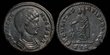
Helena. Augusta, A.D. 324-328/30. Bronze Follis (3.18g). Ticinum mint, 1st officina. Struck A.D. 326. FL HELENA AVGVSTA, diademed and mantled bust right, wearing necklace / SECVRITAS REIPVBLICAE, Securitas standing left, holding olive branch in extended right hand; P crescent T. RIC VII 202; LRBC 487. Very attractive green patina. aEF. A beautiful example.
| SOLD at A$170 | ||
| 10369 |
Crispus. Caesar, A.D. 316-326. Billon Nummus (3.19g). Londinium (London) mint. CRISPVS NOBIL C, laureate and cuirassed bust left, holding spear and shield / BEAT TRANQLITAS, altar inscribed VOTIS XX in three lines, surmounted by globe; three stars above, PLON in exergue. RIC VII 279; C&T 9.05.020; RML 1040 (forthcoming). Amazing green-silvery patina. aEF. Exceptional piece.
| SOLD at A$210 | ||
| 10370 |
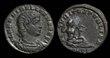
Fausta, wife of Constantine I. Augusta, A.D. 324-326. Bronze Follis (2.83g). Treveri (Trier) mint. FLAV MAX FAVSTA AVG, draped bust of Fausta right, wearing pearl necklace / SPES REI PVBLICAE, Fausta standing facing, her head turned to left, cradling two infants in her arms; in exergue, PTR. Cohen 15; RIC VII 460. An amazing glossy deep brown-green patina. A lovely example in particularly choice condition, very rare to encounter with the mintmark and in this quality, scarcely seen on the market for decades.
| SOLD at A$300 | ||
| 10371 |
Helena. Augusta, A.D. 324-328/30. Bronze Follis (3.30g). Treveri (Trier) mint, 2nd officina. Struck under Constantine I, A.D. 324-325. Diademed and mantled bust right, wearing necklace / Securitas standing left, holding olive branch; STR. RIC VII 458; LRBC 25. An exceptional masterpiece in the finest style. Boldly struck from fresh dies, with incredible detail. gEF.
| SOLD at A$300 | ||
| 10372 |
Hanniballianus. Rex Regum, A.D. 335-337. Bronze Follis (1.36g). Constantinople mint, 6th officina. Struck A.D. 336-337. FL HANNIBALLIANO REGI, bareheaded, draped and cuirassed bust right / SE CVRITAS PVBLICA, Euphrates reclining right, leaning on sceptre held in right hand and resting left arm on his lap; urn at his right side from which water flows; reed in background; CONSS. RIC VII 147; LRBC 1034. Even dark brown-green patina. gVF for this very difficult type. For a recent sold example see; Triton XXIX, lot 863 (13 January 2026), hammered USD 4,250.
| SOLD at A$375 | ||
| 10373 |
Constantius II. A.D. 337-361. Silver Siliqua (3.02g). Constantinople mint. Struck March A.D. 351-November A.D. 355. D N CONSTAN-TIVS P F AVG, pearl-diademed, draped and cuirassed bust of Constantius II right / VOTIS / XXX / MVLTIS / XXXX in four lines within laurel wreath; C B in exergue. RIC 102. Nicely toned. VF.
| SOLD at A$210 | ||
| 10374 |
Constantius II. A.D. 337-361. Silver Siliqua (2.54g). Lugdunum mint. Struck A.D. 360-361. D N CONSTAN-TIVS P F AVG, rosette-diademed, draped and cuirassed bust of Constantius II right / VICTORIA DD NN AVG, Victory advancing left, holding wreath in right hand and palm frond in left; LVG in exergue. Bastien 258; RIC 211; RSC 259b. A very rare variety. Nicely toned and struck on an exceptionally heavy flan. (P)
| SOLD at A$300 | ||
| 10375 |
Constans. A.D. 337-350. Silver Siliqua (2.77g). Siscia mint. Struck A.D. 340-350. Draped bust right, wearing pearl diadem / Victory advancing left, holding branch and trophy. RIC 166. Very rare. A pleasing gVF example with light toning and a small flan crack. From the Christoph Buchhold Collection. Acquired from Kolner Munzkabinett, Cologne.
| SOLD at A$525 | ||
| 10376 |
Constantius II. As Augustus, A.D. 337-361. Silver Siliqua (3.02g). Siscia mint. Struck A.D. 340-350. CONSTANTI-VS P F AVG, laurel and rosette-diademed, draped and cuirassed bust of Constantius II right / VICTORIA AVGVSTORVM, Victory advancing left, holding wreath and palm over shoulder; SIS (pellet-in-crescent) in exergue. RIC VII 266. Wonderfully toned. A pleasing EF example, with a tiny flan crack. (P)
| SOLD at A$1900 | ||
| 10377 |
Constantius II. A.D. 337-361. Silver Light Miliarense (4.43g). Constantinople mint, 4th officina. Struck A.D. 351-355. Pearl-diademed, draped and cuirassed bust right / Virtus standing right, holding reversed spear and resting hand on shield set on ground to right; C . A. RIC VIII 100; RSC 326a. Iridescent toning. VF. (P)
| SOLD at A$950 | ||
| 10378 |
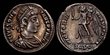
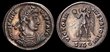
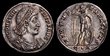
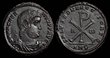
Magnentius. A.D. 350-353. Bronze Double Centenionalis (10.13g). Ambianum (Amiens) mint. Struck A.D. 353. D N MAGNEN-TIVS P F AVG, bareheaded, draped and cuirassed bust of Magnentius right / SALVS DD NN AVG ET CAES, large Christogram; A-omega across fields; AMB in exergue. RIC VIII 34. Rare, especially in this exceptional state of preservation. Wonderfully detailed and well centred on a huge, broad and weighty flan, with deep brown-green patina and excellent eye appeal. Light pitting on the obverse, otherwise an amazing coin that appears to be among the finest known examples of the type.
| SOLD at A$900 | ||
| 10379 |
Julian II. A.D. 360-363. Bronze (3.35g). Sirmium mint, 1st officina. Struck A.D. 361-363. Pearl-diademed, helmeted and cuirassed bust left, holding spear in right hand and shield on left arm / VOT / X / MVLT / XX in four lines within wreath; ASIRM. RIC VIII 108; LRBC 1619. A wonderful piece with an exceptional portrait and attractive deep green-brown patina. gEF. For the most recent example sold in similar quality see; CNG Auction 605, lot 835, 4 March 2026, hammered USD 700
| SOLD at A$400 | ||
| 10380 |
Julian II. A.D. 360-363. Bronze (8.39g). Antioch mint, 1st officina. Struck A.D. 361-363. Pearl-diademed, draped and cuirassed bust right / Bull standing right; two stars above; (palm)ANTA(palm). RIC VIII 216; LRBC 2640. An unusually attractive example, very well struck and with exceptional detail, together with a wonderful dark brown-green patina. gEF. Struck at Antioch during Julian II's short-lived pagan revival, this bronze pairs his armoured, pearl-diademed portrait with a powerful bull beneath twin stars, a clear nod to traditional sacrificial cult and celestial favour.
| SOLD at A$1050 | ||
| 10381 |
Julian II. A.D. 360-363. Bronze (8.61g). Constantinople mint, 1st officina. Struck A.D. 361-363. Pearl-diademed, draped and cuirassed bust right / Bull standing right; two stars above; CONSPA(palm). RIC VIII 162; LRBC 2058. Well centred, sharply struck and with beautiful golden highlights over a very attractive dark green patina. aEF. From the collection of David Allan.
| SOLD at A$675 | ||
| 10382 |
Gratian. A.D. 367-383. Silver Siliqua (1.86g). Treveri (Trier) mint. Struck A.D. 367-375. Pearl-diademed, draped and cuirassed bust right / Roma seated left on throne, holding Victory on globe and sceptre; TRPS pellet. RIC IX 27f1 and 45c1; RSC 86a. aEF, with superb old cabinet toning. A superb example for the type. From the Titan Collection. (P)
| SOLD at A$475 | ||
| 10383 |
Valentinian II. Western Roman Empire, A.D. 375-392. Silver Siliqua (2.08g). Trier mint. Struck A.D. 375-383. D N VALENTINIANVS IVN P F AVG, pearl-diademed, draped and cuirassed bust of Valentinian II right, seen from the front / VICTOR-IA AVGGG, Victory advancing left, holding wreath in outstretched right hand and palm frond over shoulder; TRPS in exergue. RIC IX 43 and 57a. A superb specimen, among the finest known for the issue. aEF. From the Titan Collection.
| SOLD at A$425 | ||
| 10384 |
Valentinian II. A.D. 375-392. Silver Argenteus (3.14g). Lugdunum mint. Struck A.D. 389-390. D N VALENTINI-ANVS P F AVG, pearl-diademed, draped and cuirassed bust right / VOT / XV / MVL / XX in four lines within laurel wreath; LVG below. RIC IX 51, 42 (MVLT); Bastien, Lyon-Supplement 1 (1989), 58, 220c (this specimen). Apparently only the fourth known example of this great rarity, and the first offered at auction since Hess-Divo Auction 324, lot 129, 23 October 2013, hammered CHF 2,200. A superb specimen of excellent style, with wonderful old cabinet toning. This rare argenteus, issued at Lugdunum in the closing years of Valentinian II's reign, bears the vota formula VOT XV MVLT XX, marking vows for the emperor's fifteenth anniversary and hopes for a twentieth. It is one of the rare survivals of late Roman imperial silver coinage. From the Titan Collection.
| SOLD at A$1800 | ||
| 10385 |
Theodosius I. A.D. 378-395. Silver Siliqua (1.66g). Aquileia mint. Struck A.D. 378-388. D N THEODOSIVS P F AVG, pearl-diademed, draped and cuirassed bust right / VIRTVS ROMANORVM, Roma seated facing, head left, holding sceptre and globe; AQPS in exergue. RIC IX 28d, 41b; RSC 56d. A well-detailed and absolutely choice example for the type, with pleasing toning. aEF.
| SOLD at A$625 | ||
| 10386 |
Aelia Flaccilla. Augusta, A.D. 379-386/8. Bronze (5.64g). Antioch mint, 5th officina. Struck A.D. 383-388. Pearl-diademed and draped bust right, wearing pearl necklace / Aelia Flaccilla standing right, arms raised to chest; ANTE. RIC IX 62; LRBC 2760. Dark grey-brown patina. gVF.
| SOLD at A$350 | ||
| 10387 |
Magnus Maximus. A.D. 383-388. Silver Siliqua (1.92g). Treveri (Trier) mint. Pearl-diademed, draped and cuirassed bust right / Roma seated facing on throne, head left, holding globe and reversed spear; TRPS. RIC IX 84b.1; RSC 20a. Tiny crack, otherwise aEF, with amazing old toning. A truly beautiful example for the type. From the Titan Collection.
| SOLD at A$400 | ||
| 10388 |
Magnus Maximus. A.D. 383-388. Bronze Coin (3.68g). Arelate (Arles) mint, 1st officina. Struck 25 August A.D. 383-28 August A.D. 388. Pearl-diademed, draped and cuirassed bust right / Camp gate with star between its two turrets; PCON. RIC IX 29a.1; LRBC 560 var. VF. Green-brown patina. Very rare in this state of preservation.
| SOLD at A$400 | ||
| 10389 |
Flavius Victor. A.D. 387-388. Bronze (1.31g). Aquileia mint. Struck A.D. 387-388. D N FL VIC-TOR P F AVG, pearl-diademed, draped and cuirassed bust right / SPES RO-MANORVM, camp gate with star between two turrets. RIC IX Aquileia 55b.3; LRBC 1104. VF, clear and attractive. Very rare and highly sought-after, often missing from collections. Flavius Victor was the young son of Magnus Maximus, elevated to Augustus in the West during his father's brief breakaway regime. His coinage is short-lived, struck in the tense years just before Theodosius I moved against Maximus, and it remains a scarce witness to this fleeting chapter of late Roman politics. From the Titan Collection, previously from the David Allan Collection; acquired from Frank Taylor, 11/12/1979.
| SOLD at A$450 | ||
| 10390 |
Eugenius. A.D. 392-394. Silver Siliqua (1.73g). Treveri (Trier) mint. $Pearl-diademed, draped and cuirassed bust right / Roma seated left on cuirass, holding Victory on globe and reversed spear; TRPS. RIC IX 106d; RSC 14a. Superb aEF, with old cabinet grey toning and light iridescence. An amazing coin, missing from most collections. For the most recent example in similar condition see; Classical Numismatic Group Auction 129, lot 581, 13 May 2025, hammered USD 5,500. For another recent example see; Kunker Auction 438, lot 842, 16 March 2026, hammered EUR 550, and clearly far inferior to the present superb specimen. Eugenius' coinage is remarkable for its strongly individualised portraiture, a feature not seen on imperial issues since the reign of Julian II some thirty years earlier. Like Julian, he is depicted with a full beard, an intentional reference to the philosopher's image of classical tradition. Although outwardly Christian, this appearance was readily interpreted as a sign of sympathy toward the pagan aristocracy of Rome, whose standing had greatly diminished under the rigorously Catholic rule of Theodosius I in the East. Seeking to secure support in the West, Eugenius appears to have made calculated gestures toward the adherents of the old religion, who received him with enthusiasm. In the end, however, this alignment gave Theodosius the justification he required to invade Italy and extinguish the usurpation.
| SOLD at A$1250 | ||
| 10391 |
Theodosius II. A.D. 402-450. Silver Light Miliarensis (4.32g). Constantinople mint. Struck circa A.D. 408-420. Pearl-diademed, draped and cuirassed bust left, seen from the front / Theodosius II, nimbate, standing facing in military dress, head left, raising right hand and holding globe; star to left, CON in exergue. RIC X 370; RSC 20a. A quite beautiful coin with lovely old cabinet toning, and one of the finest known examples of the type.
| SOLD at A$1150 | ||
| 10392 |
Theodosius II. A.D. 402-450. Silver Miliarensis (4.25g). Constantinople mint. Struck circa A.D. 408-420. Pearl-diademed, draped and cuirassed bust left, seen from the front / Theodosius standing facing, raising hand and holding globus, star to left; CON. RIC 370; RSC 20a. EF. An exceptional and highly attractive example with beautiful iridescent toning, much original mint lustre remaining, and excellent overall eye appeal. A superb specimen. (P)
| SOLD at A$2600 | ||
| 10393 |
Constantine III. A.D. 407-411. Silver Siliqua (1.41g). Lugdunum (Lyon) mint, 2nd emission, A.D. 408-409. Pearl-diademed, draped and cuirassed bust right / Roma seated left on throne, holding Victory on globe and reversed spear; SMLD. RIC X 1531; King, Fifth, p. 287, pl. 22, 2; Lyon 251; RSC 4b. EF. A superb example with lovely grey toning and delicate golden hues. For a recently sold example see; Classical Numismatic Group Auction 124, lot 724, hammered USD 4,250. From the Titan Collection; previously acquired from Classical Numismatic Group at the Sydney Coin Show in July 1996.
| SOLD at A$1500 | ||

| First | Previous | Next | Last | Index |